
Last updated November 22, 2026
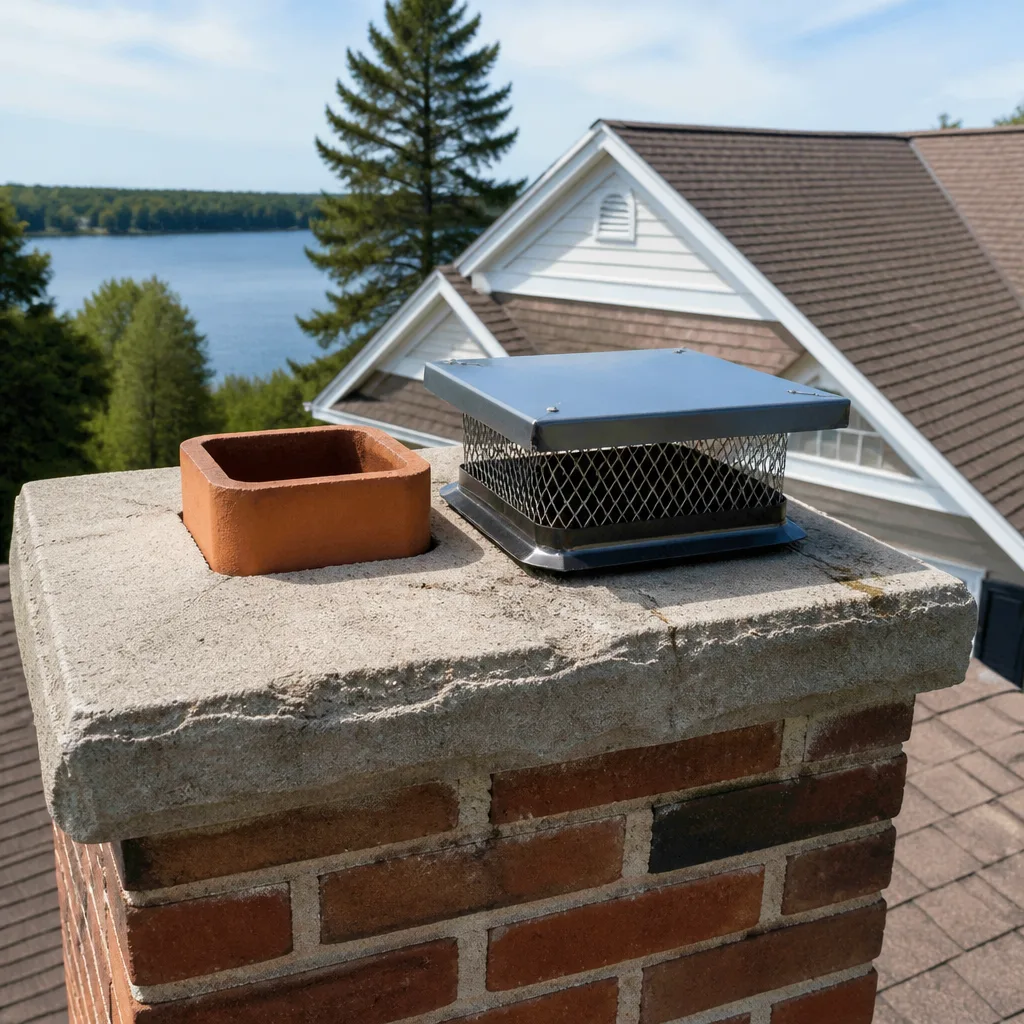 Sweep & inspection
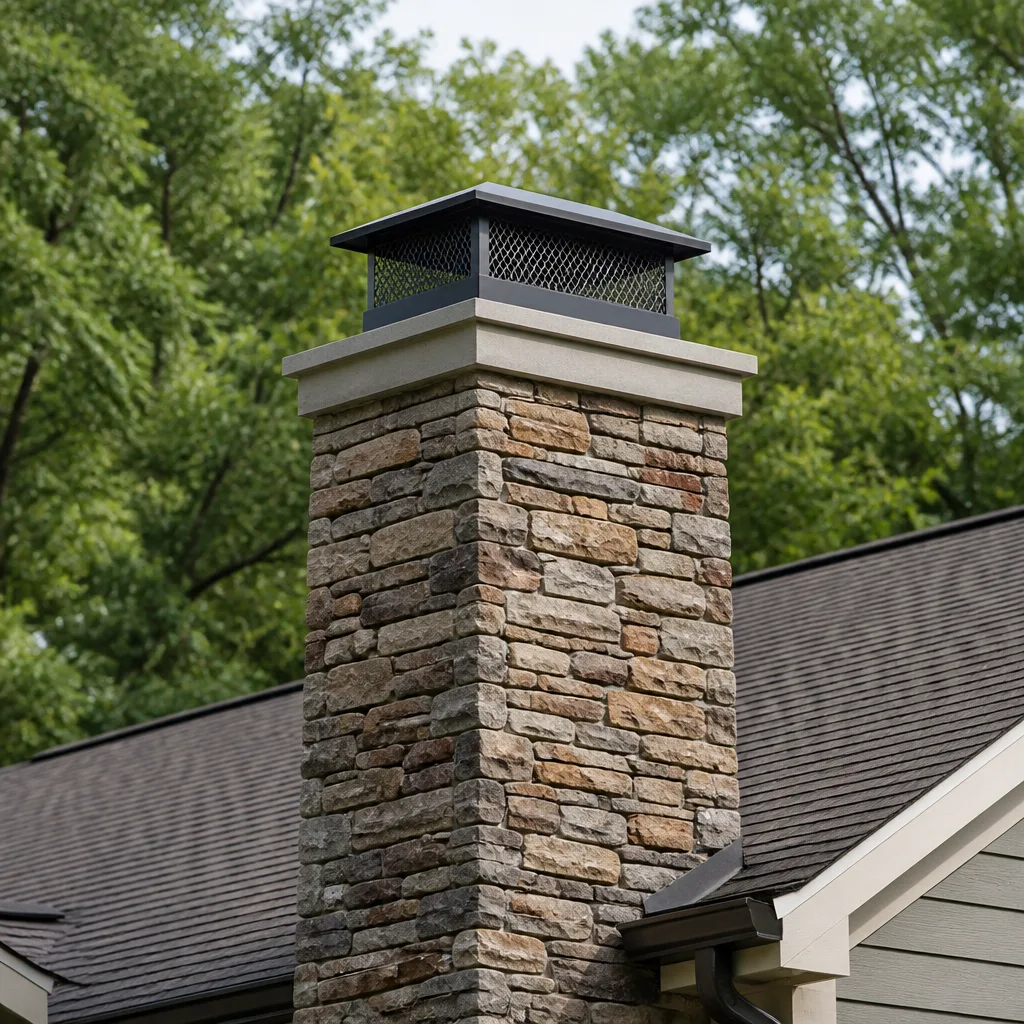 Caps & crowns
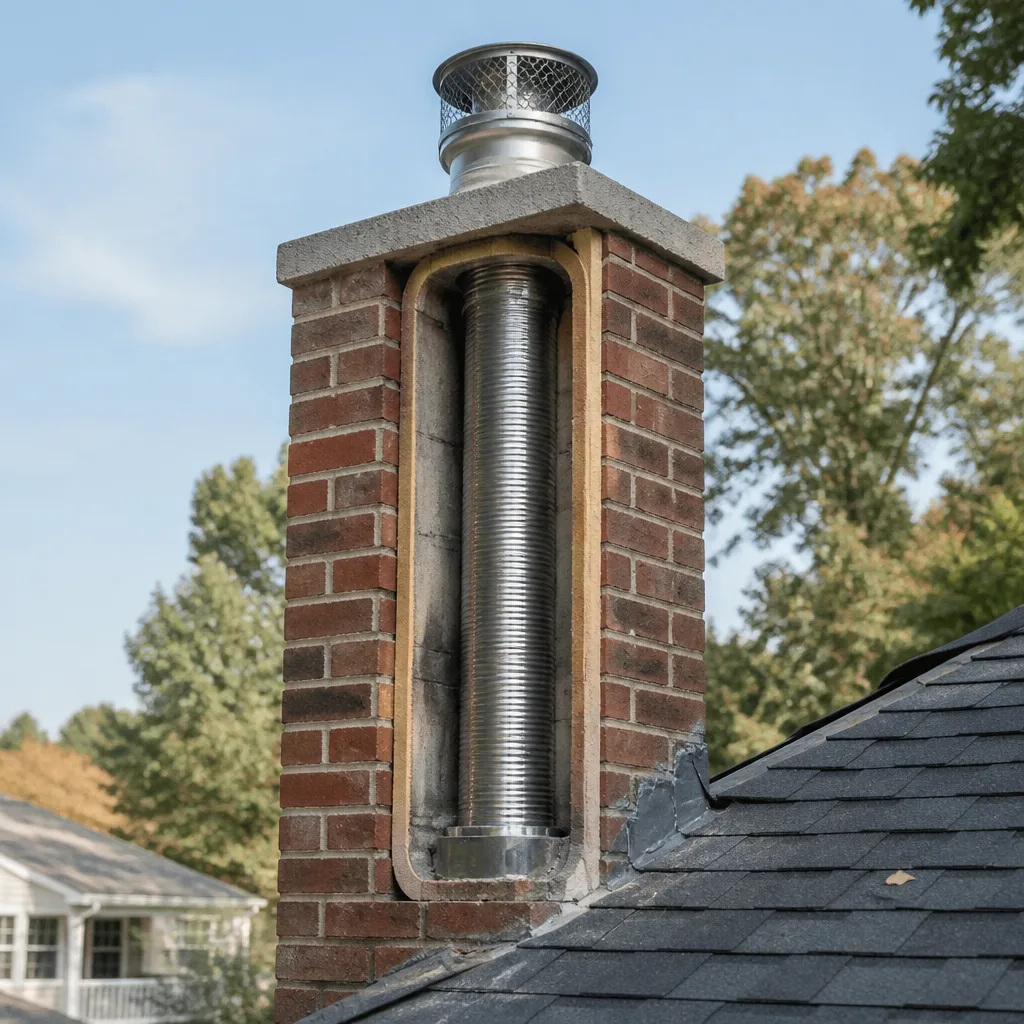 Flue relining
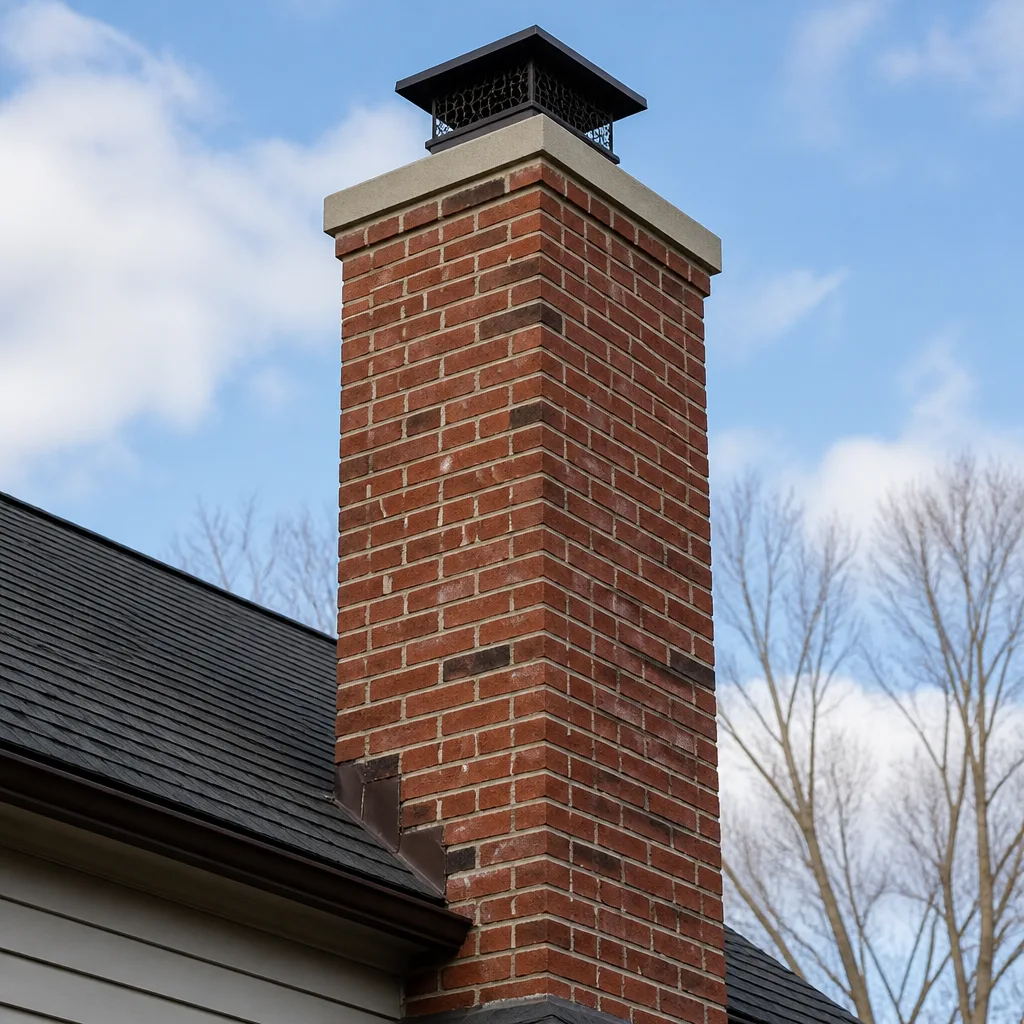 Masonry repair
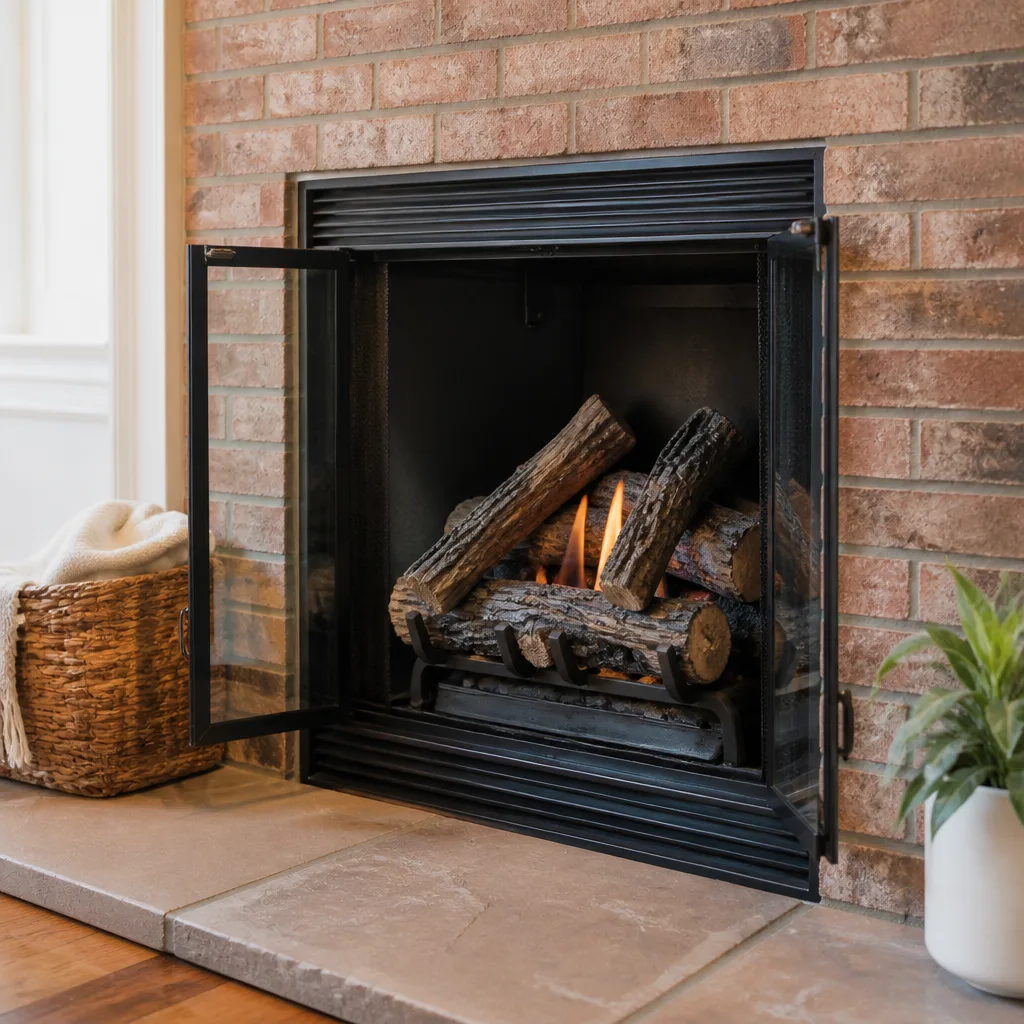 Gas fireplace service
Level 1 sweep and inspection to the NFPA 211 annual standard - flue, crown, cap, and flashing checked and photographed
Chimney sweep logs do not sweep chimneys. They loosen some creosote - which then falls where a brush and vacuum still have to collect it.
DIY vs Professional Chimney Cleaning: The Forest Hills Homeowner’s Decision Guide
The brush and rod kit does a fine job on the creosote. It does nothing to tell you whether the liner behind that creosote is cracked, whether the smoke chamber is coated in glazed deposits, or whether the crown is quietly letting water into the masonry. That gap between cleaning and assessing is where most DIY chimney decisions go wrong. This guide is written for Forest Hills homeowners who are willing to get their hands dirty but want to know where the line sits between useful supplement and genuine hazard. We’ll cover what DIY sweeping actually accomplishes, which chimney configurations around Forest Hills make it risky, how creosote stage changes the equation, and how to decide honestly whether to climb the ladder or book a professional.
Quick Answer
DIY chimney cleaning is reasonable for light, routine soot removal on a straight, accessible flue with a sound liner, but it cannot substitute for a professional inspection because you cannot see the liner interior, smoke chamber, or crown condition from the roof or the firebox. In Forest Hills, older homes with clay tile liners and attached houses with offset flues are the highest-risk candidates for DIY, where a brush can disturb glazed creosote or hide a developing crack. The safest framework: use DIY as a supplement between professional sweeps, never as a replacement for the annual assessment.
Styles & brands we work with
- Sweep & inspection
- Caps & crowns
- Flue relining
- Masonry repair
- Gas fireplace service
Table of Contents
- What DIY Chimney Cleaning Actually Accomplishes
- What DIY Cannot Assess: Liner, Smoke Chamber, and Crown
- Forest Hills Chimney Configurations That Make DIY Risky
- How Creosote Stage Changes the DIY Equation
- Insurance, CO Detectors, and the Documentation Gap
- A Decision Framework: Supplement vs Substitution
- DIY Safety Basics Before You Climb
- What a Professional Sweep Adds Beyond the Brush
What DIY Chimney Cleaning Actually Accomplishes
A homeowner with a proper brush set, drop cloths, and a shop vacuum can remove loose soot and light, powdery creosote from the flue walls of a straight run. That is genuine cleaning, and on a well-maintained chimney with a sound liner it removes real fuel load from the system. For a wood-burning fireplace used a few cords a season, a midwinter brush-down can be a sensible supplement between professional visits. It is not wasted effort, and we don’t tell homeowners they’re foolish for trying it on a chimney that’s already been assessed as sound.
What the brush accomplishes is a mechanical scrub of the surfaces it can reach. On a straight flue, that reach is decent. Push the brush up from the firebox and you contact the lower flue walls. Drop it from the roof and you contact the upper walls. What the brush does not do is measure. It doesn’t tell you the thickness of what’s left behind, doesn’t tell you whether the tile is spalling, and doesn’t tell you whether a hairline crack in the liner is letting heat reach combustible framing. Those are the questions that determine whether your chimney is safe to burn in this winter.
DIY brushing also can’t reach the smoke chamber, the sloped transition between the firebox and the flue. That chamber accumulates creosote in ways a straight brush won’t clear, and it’s one of the spots where chimney fires start. In our experience working on Forest Hills homes, the smoke chamber is also where homeowners most often underestimate what’s there. The surface looks fine from the firebox. It doesn’t look fine from the top of the flue with a mirror and a light.
- What DIY brushing does: removes loose soot and powdery creosote from reachable flue walls
- What it does partially: cleans the lower flue and firebox throat on straight runs
- What it does not do: clear the smoke chamber, assess the liner, or evaluate the crown
- What it cannot do: document condition for insurance, real estate, or a safety record
What DIY Cannot Assess: Liner, Smoke Chamber, and Crown
There are three zones in a chimney that a homeowner cannot honestly evaluate from a ladder or a firebox, and each one is where serious problems hide. The liner interior is the first. From the firebox you see the bottom few feet of tile at best. From the roof you see the top course. The middle of the flue, where heat cycling, moisture, and acidic condensate do their work over the life of a chimney, is invisible without a camera. Clay tile liners in older homes crack from thermal stress and shift as the house settles. A cracked tile is a path for heat and carbon monoxide into framing and living space.
The smoke chamber is the second blind spot. That sloped shelf above the damper collects creosote in ways that brushing from below doesn’t clear and brushing from above can’t reach. Glazed creosote in the smoke chamber can ignite and send a pulse of flame up the flue. You can’t see this zone well enough from either end of the chimney to make a judgment call about whether it’s clean.
The crown is the third. A crown is the concrete cap at the top of the masonry that sheds water away from the chimney body. When it cracks, water gets into the masonry, freezes in Forest Hills winters, and spalls the brick face. From the roof you can see the top of the crown, but you can’t see whether water has already traveled into the flue lining behind the brick. Crowns and caps are also where the venting and animal-intrusion story lives. A missing or damaged cap lets rain, squirrels, and birds into the flue. Our chimney cap & crown work exists because those two items prevent more damage than any other single repair on the system.
None of these three assessments require heroics. All three require the right tooling and experience reading what the tooling shows. That’s the honest core of the DIY-versus-pro question.
Forest Hills Chimney Configurations That Make DIY Risky
Forest Hills has a housing stock that includes a substantial number of prewar and midcentury homes, and the chimneys in those homes share characteristics that make DIY cleaning riskier than it would be on a new build. The most common pattern is a clay tile liner inside a brick chimney. Clay tile is durable but brittle. It cracks from thermal shock and shifts as masonry settles, and once a tile cracks, the next brush stroke can widen the crack or dislodge a flue tile fragment that then falls into the smoke shelf. What was cleaning becomes a repair.
The second pattern is the offset flue, common in attached houses where the firebox sits on an interior wall and the flue shifts laterally before it exits the roof. Offsets are where a straight brush rod binds, where creosote accumulates on the ledge at the offset, and where a homeowner’s brush can miss an entire section of flue wall because it can’t follow the bend. A professional sweep working with flexible tooling can navigate an offset. A homeowner with a rigid kit cannot.
The third pattern is the chimney that serves a converted appliance. Some Forest Hills homes have had a wood stove or a gas insert added to a chimney that was originally built for an open fireplace. The flue size and the liner requirements change with the appliance, and a chimney that looks safe for brushing may already be non-compliant for the appliance feeding into it. That’s a code and safety question that requires a proper inspection, not a judgment call from the roof.
- Clay tile liners: brittle, prone to cracking, and easily damaged by amateur brushing
- Offset flues in attached houses: brush binds at the offset, creosote accumulates on the ledge, sections get missed
- Converted appliances: flue and liner requirements differ from the original configuration, and a walk-up assessment won’t catch it
- Shared chimneys in attached housing: a problem in one flue can affect neighbors, so the assessment needs to be careful
If your Forest Hills home has any of these configurations, we’d treat DIY brushing as an occasional touch-up at most, and only after a professional assessment has confirmed the liner is sound. Anything else is guesswork on a system where guesswork has real consequences.
How Creosote Stage Changes the DIY Equation
Creosote forms in three recognizable stages, and the stage matters enormously for whether DIY brushing helps or hurts. Stage one is light, flaky, and powdery. It brushes off easily and a homeowner with reasonable tools can remove a meaningful amount of it. Stage two is flaky with a crust, denser and harder to remove. A brush handles the looser edges but leaves the crust behind. Stage three is glazed, hard, tar-like creosote that has condensed onto the flue wall under high heat. A brush passes over it. It doesn’t remove it, and in some cases brushing glazed creosote does real harm by breaking the glaze and exposing a more ignitable surface underneath.
Glazed creosote is the stage that most often causes chimney fires. It burns hot, and it can ignite as a solid deposit on the flue wall rather than as a flame traveling with the smoke. If your chimney has reached stage three, DIY brushing is not a supplement to professional service – it’s the wrong tool entirely. Removal requires chemical treatment and specialized tooling, and the flue needs to be assessed before and after to confirm the liner survived. We handle glazed deposits through professional-grade products and, when the liner is compromised, resurfacing with HeatShield rather than tearing out and rebuilding the chimney.
The stage also depends on how you burn. Seasoned hardwood, hot fires, and good draft keep deposits in stage one or two. Green wood, smoldering fires, and a cold flue accelerate the buildup. If you’re not sure what stage you’re looking at, that’s the moment to bring in someone who reads creosote for a living.
- Stage 1 – powdery: brushable by a careful homeowner between professional sweeps
- Stage 2 – flaky and crusted: partially brushable, but the crust that remains is the problem
- Stage 3 – glazed: not brushable by hand tools, and disturbed glazed deposits raise fire risk
Insurance, CO Detectors, and the Documentation Gap
Homeowners’ insurance policies differ, and we’re not going to tell you what yours says because we don’t know. What we can tell you is that when a chimney fire or carbon monoxide incident happens, insurers generally want to see evidence the chimney was maintained and inspected. A homeowner who brushed the flue themselves has no documentation. A homeowner who had a professional inspection has a written record of the chimney’s condition, what was found, and what was recommended. In a claim, that difference matters.
The documentation gap also affects real estate transactions. In Forest Hills, where older homes change hands often, a buyer’s inspector will flag a chimney that has no recent assessment. When the sale is contingent on the chimney being in reasonable shape, a professional inspection report is the document that moves the conversation forward. A seller who says “I’ve been sweeping it myself” has a harder time answering the follow-up questions, because the follow-up questions are about the liner and the crown, and those went unassessed.
The carbon monoxide side is simpler. Your CO detector on the wall doesn’t tell you where the CO came from if it alarms. A chimney inspection can. If a liner has failed, or the smoke chamber has separated from the flue, or the appliance has been backdrafting, those are all things the inspection finds and DIY brushing doesn’t. If you don’t have a working CO detector on every sleeping level of your Forest Hills home, that’s a harder safety gap than the chimney cleaning question. Address it either way.
For homeowners buying or selling, we treat our inspection service as a standalone offering – a documented assessment independent of any sweeping work, with a written report you can hand to a buyer, an insurer, or a real estate attorney.
A Decision Framework: Supplement vs Substitution
The line between “reasonable supplement” and “dangerous substitution” is not about willingness to climb a ladder. It’s about whether the underlying system has been assessed as sound and whether the homeowner can actually see what needs seeing.
DIY sweeping is a reasonable supplement when all of these are true:
- The chimney has had a professional inspection within the past year and the liner is documented as sound
- The flue is straight, with no offsets, and accessible from both the roof and the firebox
- You’re burning seasoned wood and the deposits are light and powdery (stage one)
- The chimney is a single flue serving a single open fireplace, not a shared flue or a converted appliance
- You’re brushing between scheduled professional sweeps, not replacing them
DIY sweeping becomes a dangerous substitution when any of these are true:
- The chimney has not been professionally inspected, or the last inspection was more than a year ago
- The flue is offset, or the liner is clay tile with visible spalling or shift in the tiles you can see
- The deposits are crusted or glazed (stage two or three)
- The chimney serves a wood stove, gas insert, or other converted appliance
- The chimney is shared with an attached neighbor
- You’ve had a chimney fire, a CO alarm, or persistent draft problems
If any of the substitution lines apply, book an inspection before you burn again. The chimney sweep visit is not just a cleaning. It’s the assessment your decision should have been based on from the beginning.
DIY Safety Basics Before You Climb
If you’ve decided to brush, do it safely. The ladder work on a chimney is the most dangerous part of the job, and a fall from roof height is the worst outcome of any cleaning attempt. Make sure the ladder is stable and tied off, the roof is not wet or icy, and you have someone at the base. Don’t do chimney work alone. Don’t do it after dark or in bad weather.
Inside the house, seal the firebox opening with a drop cloth taped around the edges and set up negative pressure with a shop vac so soot doesn’t migrate into the living room. Wear eye protection, gloves, and a respirator – the soot from a wood-burning fireplace is not something you want in your lungs. Work the brush with steady pressure and avoid forcing it through tight spots, especially at the smoke shelf and the damper frame.
If you have a gas appliance, do not DIY the flue. The combustion risks are different and the appliance needs to be disconnected and reconnected properly by someone qualified. If the appliance is vented into the chimney you’re planning to brush, leave it alone.
Once you’re done, check the firebox for any debris that fell during the brush and any visible cracks in the firebox brick or mortar joints. If you see anything that looks fresh or new, stop burning and call for an inspection.
- Stage the ladder on stable, dry ground and tie it off at the roof
- Seal the firebox opening and run a shop vac for negative pressure
- Wear eye protection, gloves, and a respirator for the entire job
- Brush from the roof down, then from the firebox up, with steady pressure
- Inspect the firebox afterward for anything that looks new or suspicious
- Clean up fully and store your tools so the next job is easy
What a Professional Sweep Adds Beyond the Brush
A professional sweep is a camera-assisted assessment as much as a cleaning. The camera goes up the flue to look at what the brush can’t. The technician reads the liner for cracks, checks the smoke chamber for glazed deposits, evaluates the crown and cap, and produces a written report that says what was found, what was cleaned, and what needs attention. That report is the deliverable that DIY sweeping cannot match, and it’s why the sweep is the entry point to everything else on the chimney.
When the sweep finds something, the difference between a sweep-only contractor and a full-system specialist matters. Our technicians have up to 8 years of experience, and we work with professional-grade chimney industry brands including DuraFlex, Olympia Chimney, Famco, and Copperfield. If the liner is compromised, we can resurface it with HeatShield, or install a DuraFlex or Olympia flexible liner system without demolishing the chimney. If the crown is failing or the cap is missing, we install Gelco and Famco caps and covers that solve the root cause rather than just patching the symptom. If the firebox has structural damage, our chimney repair work handles that under the same contractor.
That’s the practical answer to the DIY question. Do the brush work if it makes sense on your chimney. But get the assessment from someone who can read the liner and fix what’s found on the same call, rather than having to call a second company when the sweep turns up a problem.
Common Mistakes to Avoid
- Brushing glazed creosote: a brush passes over stage three deposits without removing them, and disturbing the glaze can expose a more ignitable surface. If your deposits are dark, shiny, and hard, that’s the wrong tool entirely.
- Brushing before an inspection: without a documented assessment of the liner, you don’t know if the chimney is safe to brush. In a Forest Hills home with clay tile, the brush can open a crack that was already forming.
- Ignoring the smoke chamber: the sloped section above the damper is where chimney fires often start, and it’s the part of the chimney a straight brush cannot reach. Homeowners who brush regularly still have smoke chamber deposits.
- Climbing on a wet or icy roof: Forest Hills winters make the roof hazard real. A fall is worse than a dirty flue. Wait for dry conditions.
- Assuming the crown is fine because you can see the top: you can see the surface. You can’t see whether water has already gotten behind it. A cracked crown shows up as interior damage long before it’s obvious on top.
- Skipping the CO detector side: a chimney in good visible shape can still leak carbon monoxide if the liner has failed. Detectors on every sleeping level are a separate, non-negotiable safety step.
- Treating DIY as a substitute for the annual inspection: brushing a chimney you’ve never had inspected is not maintenance – it’s guesswork.
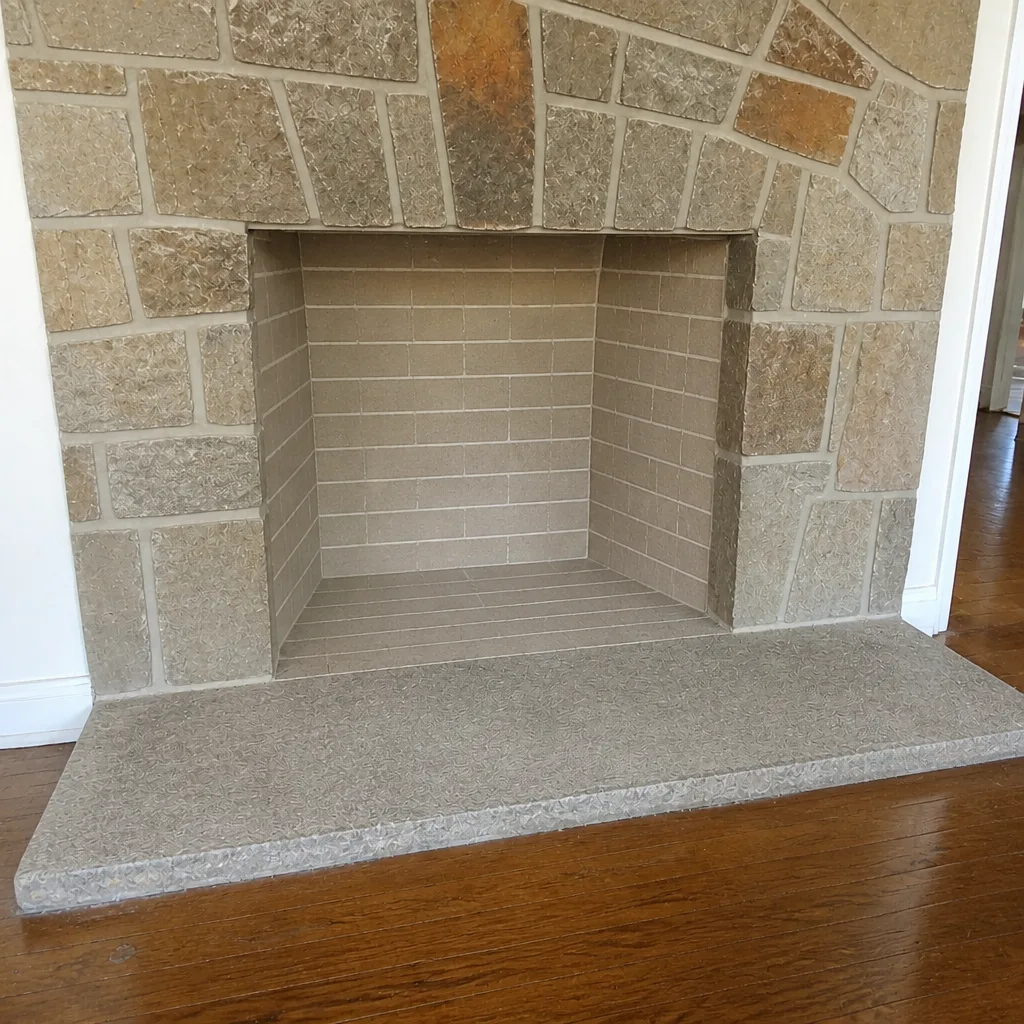
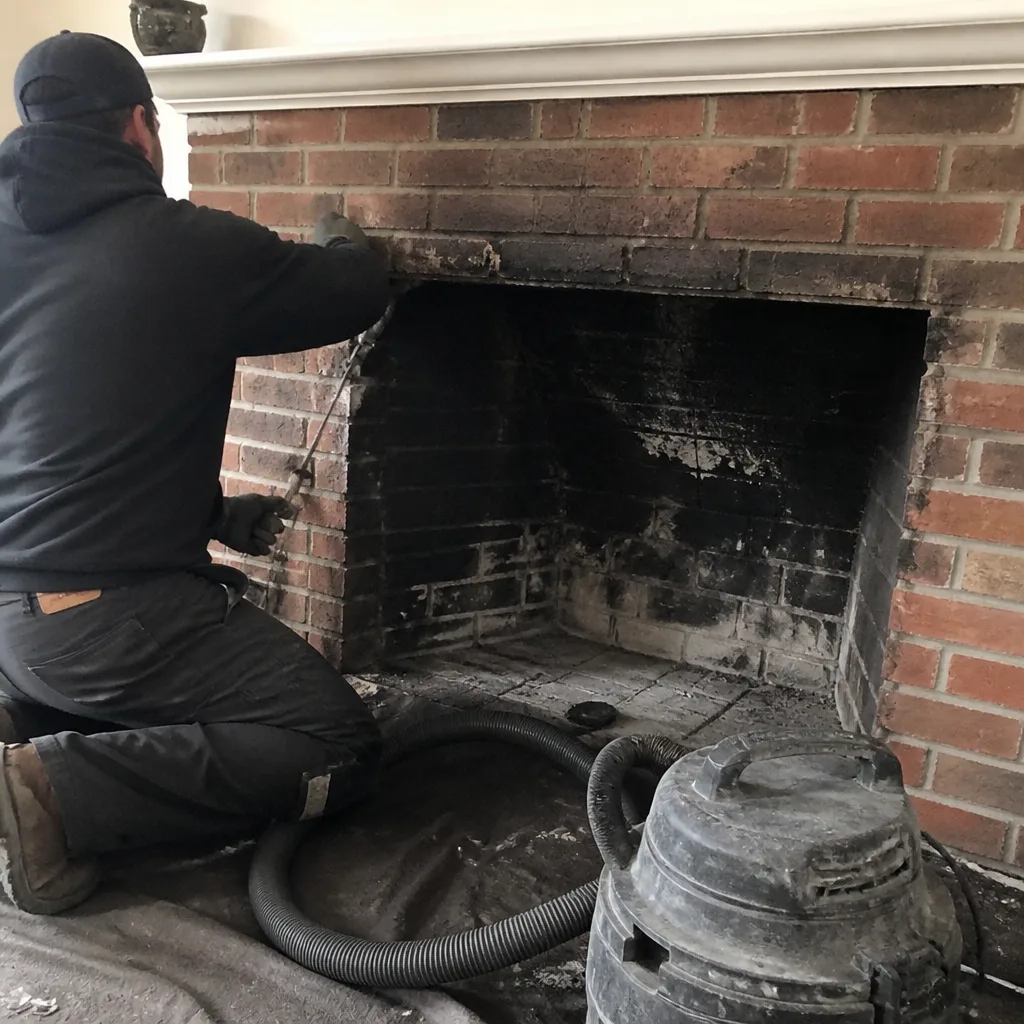
See the difference
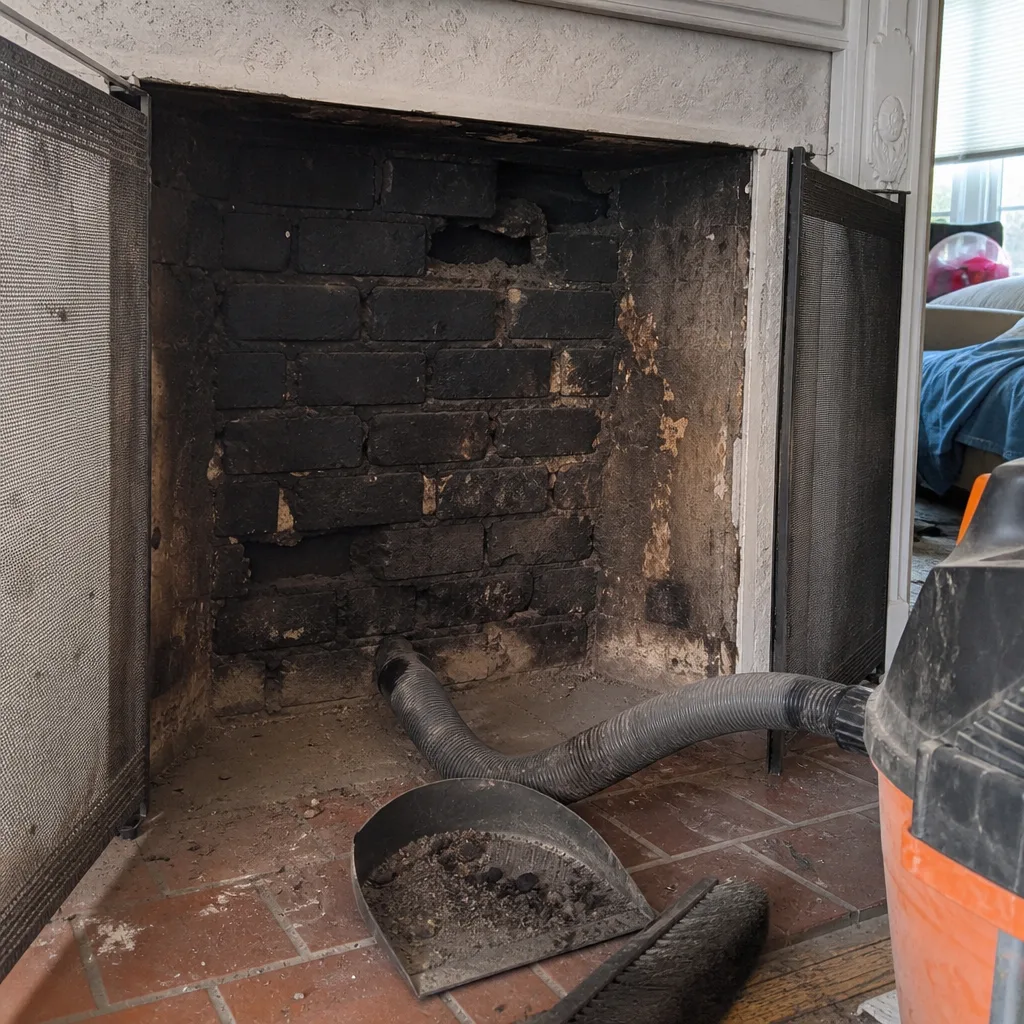 Before
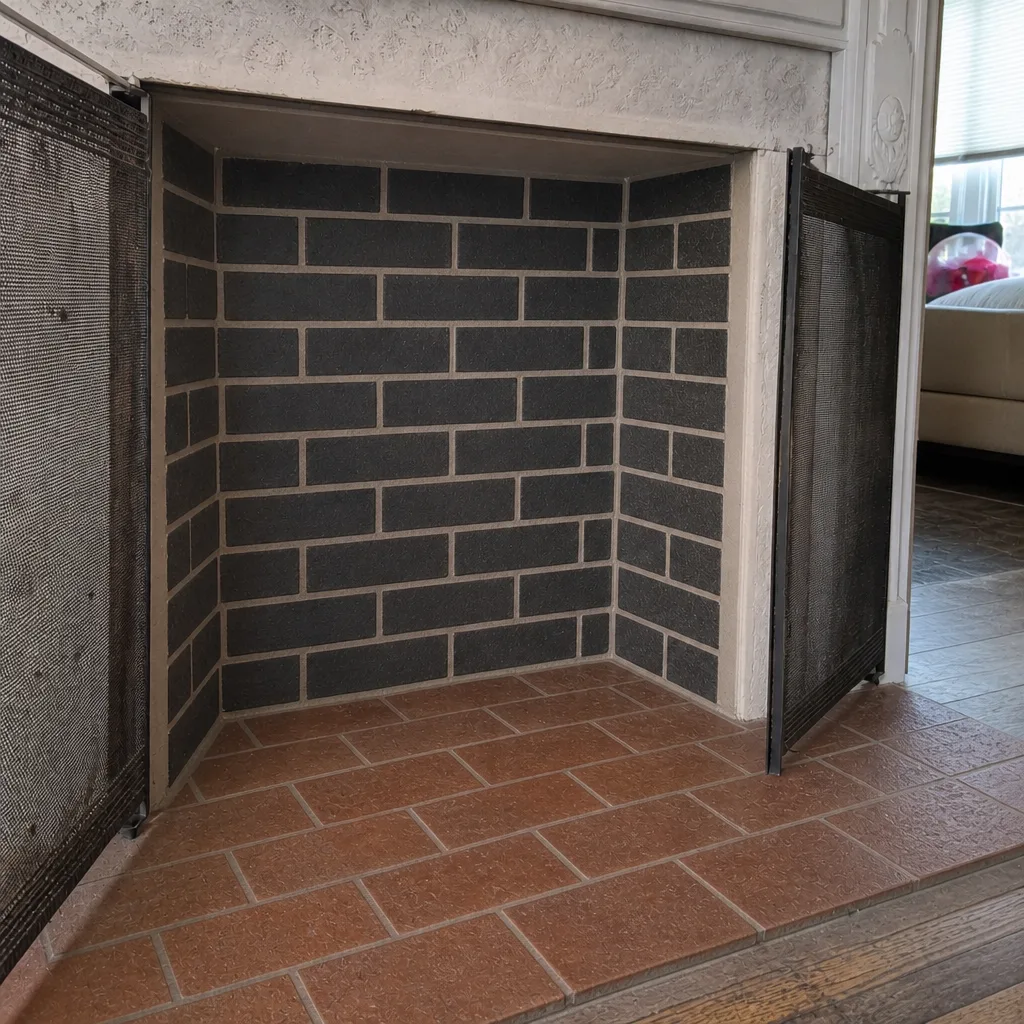 After
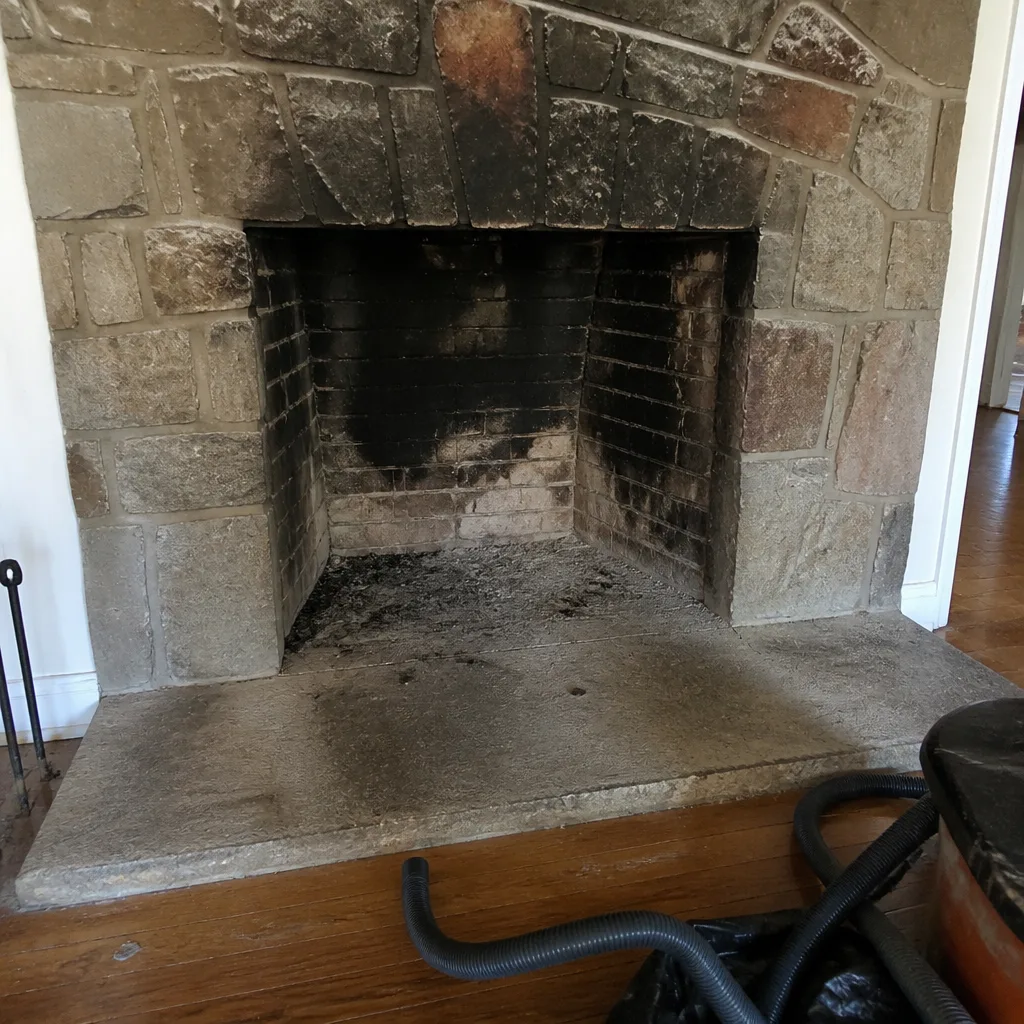 Before
 After
 Before
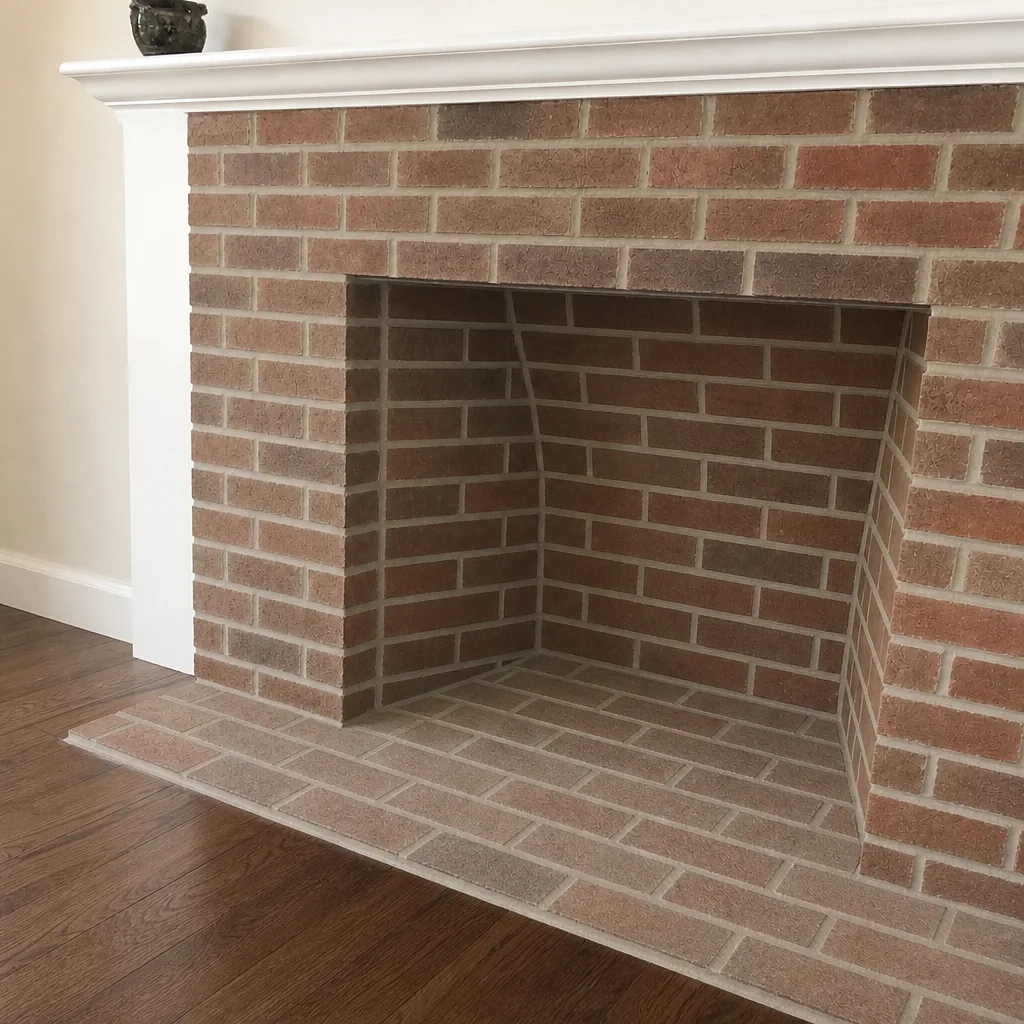 After
When to Call a Professional
Call a professional before you brush if your chimney has never been inspected, if the last inspection was more than a year ago, if the liner is older clay tile, if the flue is offset, if the chimney serves a wood stove or gas appliance, or if the chimney is shared with an attached neighbor. Call immediately if you’ve had a chimney fire, a CO alarm, or persistent draft problems. Call if you’re buying or selling a Forest Hills home and need a documented assessment. Chimney Sweep Forest Hills offers free estimates in Forest Hills – call (855) 410-4917. We answer 24/7. Fast dispatch from 7am to 7pm, Sunday through Friday.
Frequently Asked Questions
You can brush light, powdery deposits from a straight, accessible flue if a professional has already confirmed the liner is sound. You cannot assess the liner interior, smoke chamber, or crown condition from a ladder or the firebox, so DIY cleaning should never replace a professional assessment. Call (855) 410-4917 for an inspection before you decide – estimates are free.
Most chimneys need a professional sweep once a year, more often if you burn heavily or notice slow draft. A homeowner brushing between professional sweeps is a supplement, not a substitute. If your last inspection was more than a year ago, book it now – call (855) 410-4917.
Creosote builds in stages, and the further it goes, the higher the risk of a chimney fire or a carbon monoxide leak from a failed liner. Glazed stage three deposits are the most dangerous, and they’re also the hardest to remove once they’ve formed. Skipping a season is not necessarily a crisis, but skipping years is. Call (855) 410-4917 for an honest assessment – estimates are free.
Not automatically. A cracked or deteriorated liner often can be resurfaced with HeatShield rather than replaced. A full reline with DuraFlex or Olympia Chimney is only needed when the liner cannot be restored to a safe condition. Nothing is recommended without camera evidence you can see for yourself, and we tell you when a repair can safely wait. Call (855) 410-4917 for an exact quote – estimates are free.
Policies differ, and we can’t speak to yours specifically. Many insurers want evidence of professional maintenance after a fire or CO incident, and a documented inspection report is that evidence. Call (855) 410-4917 if you need a written inspection for your insurer or for a real estate transaction.
No, not safely. An offset flue requires flexible tooling to follow the bend, and a rigid homeowner brush will bind at the offset and miss an entire section of flue wall. That’s a professional sweep with professional tooling. Call (855) 410-4917 for the Forest Hills offset flue case – estimates are free.
The Bottom Line
DIY chimney cleaning is genuinely useful as a supplement between professional sweeps, and it’s genuinely dangerous as a substitute for one. The difference comes down to three things you can’t see from the roof or the firebox: the liner, the smoke chamber, and the crown. If your chimney has been assessed as sound and you’re brushing lightly between annual sweeps, that’s fine. If it hasn’t been assessed, brushing is guesswork on a system where guesswork causes fires. Forest Hills homes with older clay tile liners, offset flues, and converted appliances sit firmly on the “professional” side of that line. Our technicians have up to 8 years of experience and work with professional-grade brands including HeatShield, DuraFlex, and Olympia Chimney, so a sweep that finds a problem can fix it on the same call. From cap to firebox, one company, one call. Chimney Sweep Forest Hills is ready when you are.
Contact
If you’re still not sure which side of the line your chimney is on, that’s the point where a professional look settles it faster than a ladder ever will. Call (855) 410-4917 for a free estimate. We answer 24/7. Fast dispatch from 7am to 7pm, Sunday through Friday. Your inspection report tells you exactly what your chimney needs – and what it doesn’t.
Written by the team at Chimney Sweep Forest Hills.