
Last updated November 22, 2026
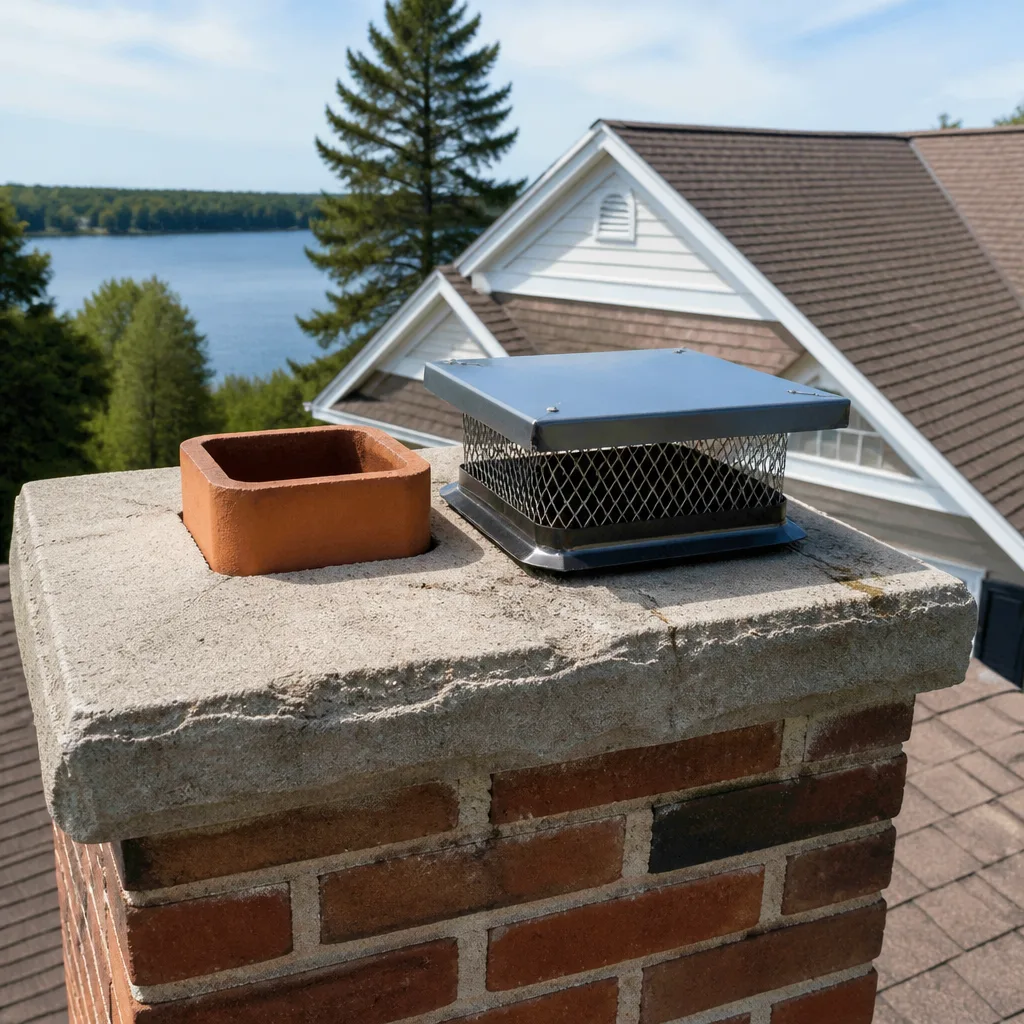 Sweep & inspection
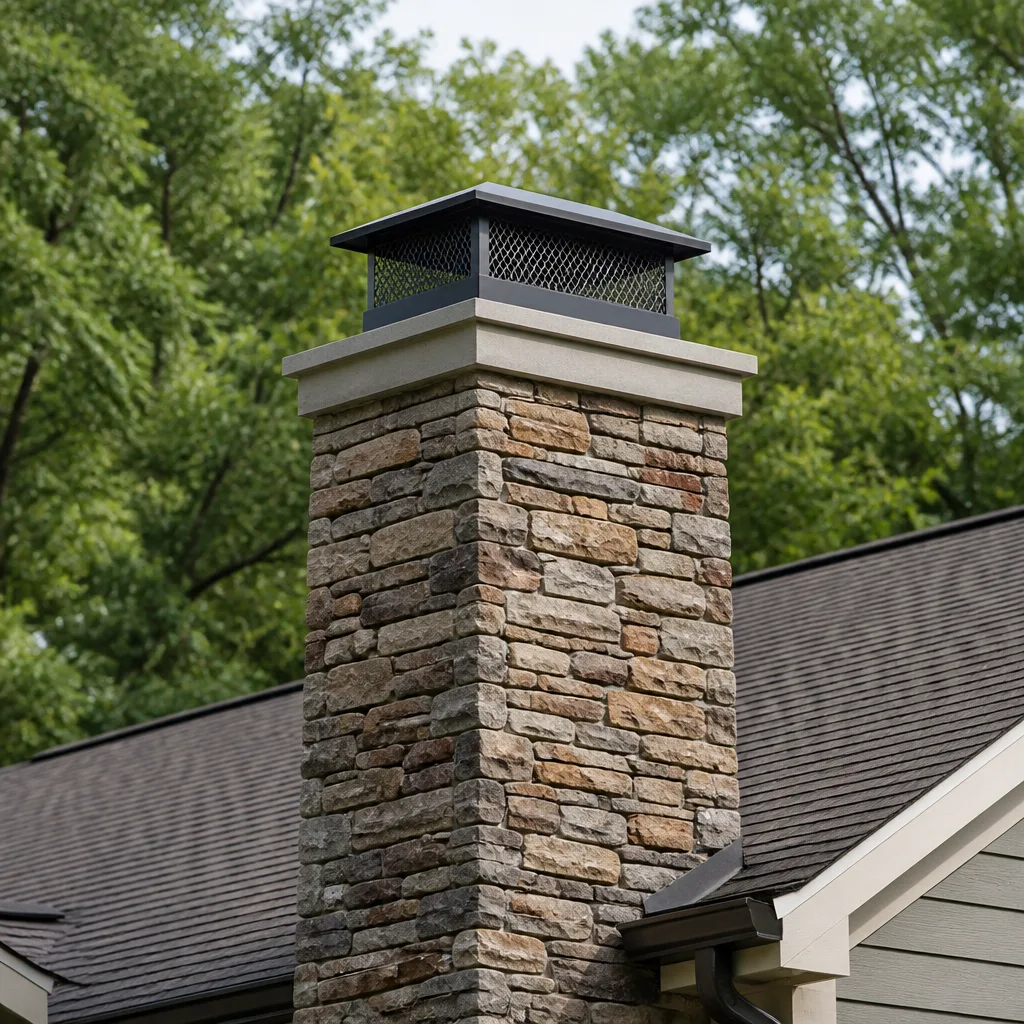 Caps & crowns
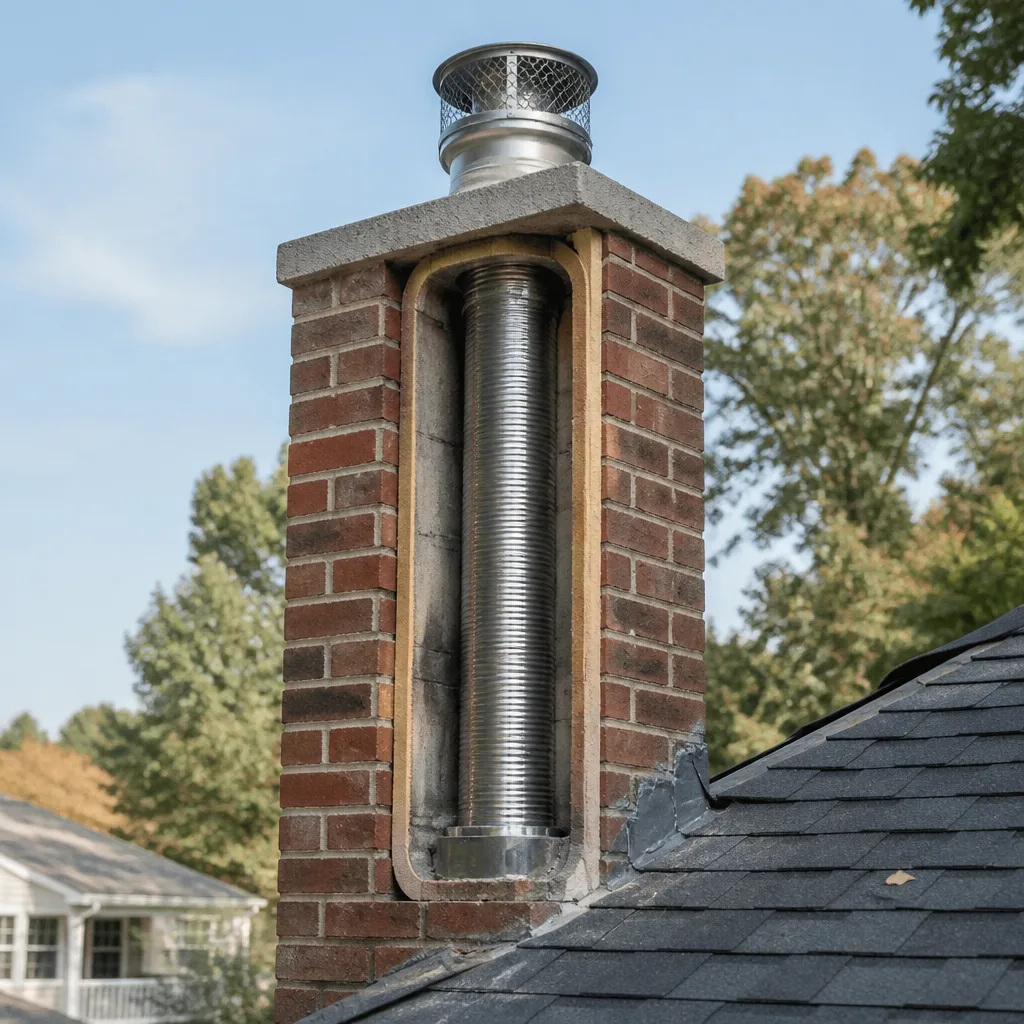 Flue relining
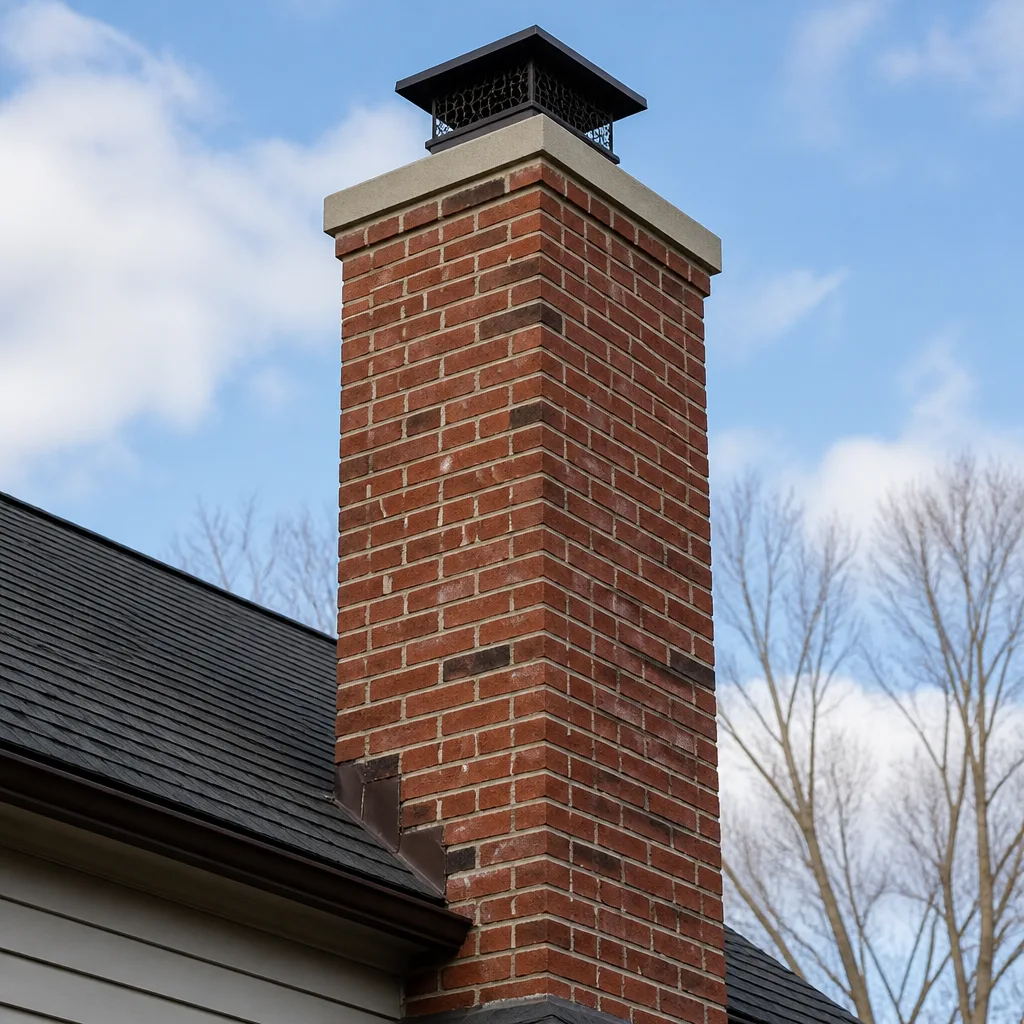 Masonry repair
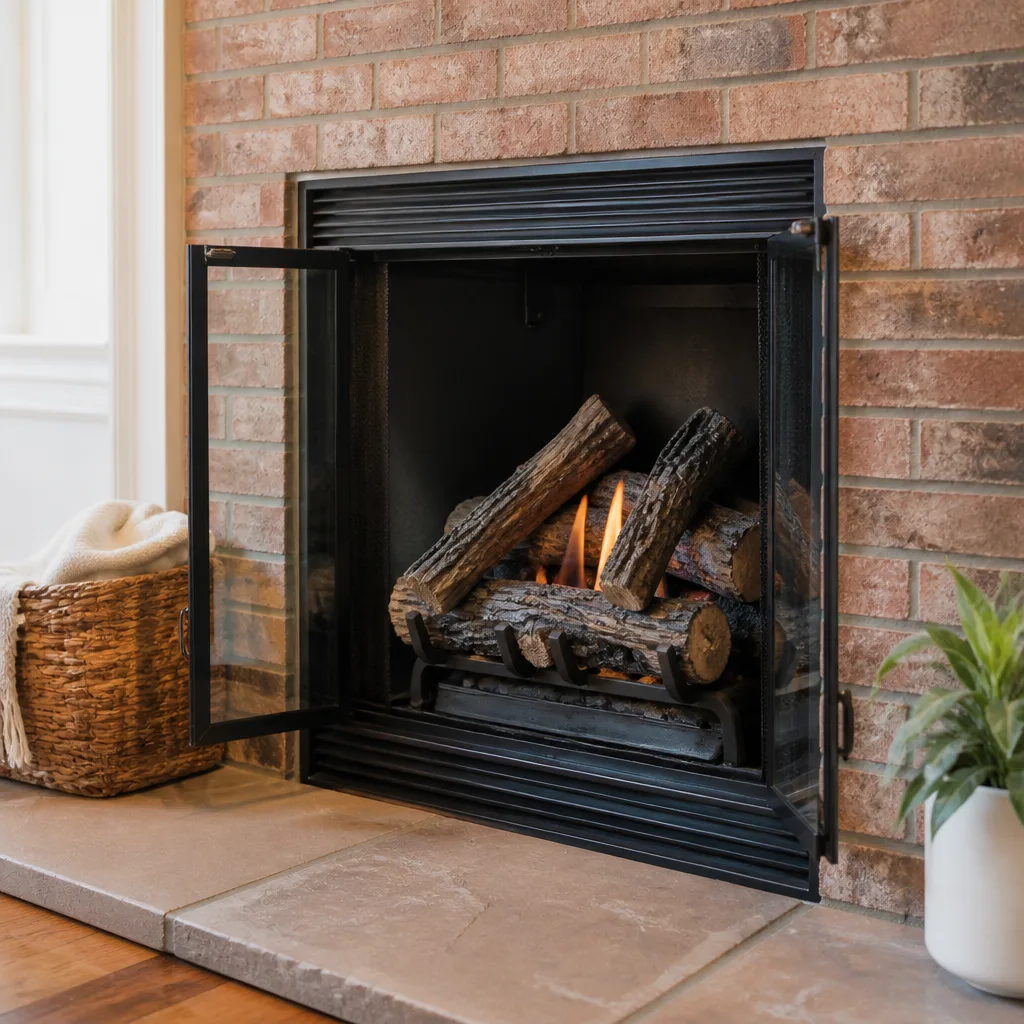 Gas fireplace service
Level 1 sweep and inspection to the NFPA 211 annual standard - flue, crown, cap, and flashing checked and photographed
Chimney sweep logs do not sweep chimneys. They loosen some creosote - which then falls where a brush and vacuum still have to collect it.
Chimney Cleaning Warning Signs: A Forest Hills Homeowner’s Reference Guide
Most homeowners think a chimney problem arrives with a bang: smoke rolling into the living room, a fire that won’t draw. In our experience, that’s the last chapter, not the first. Chimneys telegraph trouble long before that, and the early warnings are quiet: a chalky stain on the brick, a faint odor on a cold morning, a damper that grinds instead of gliding. A single sign on its own rarely means disaster. Two or three together usually tell a story. This guide walks through the signals we look for at Forest Hills properties, what each one means, and which ones can wait. The goal is simple: you should know when to pick up the phone and when to stop worrying.
Quick Answer
In Forest Hills, the chimney warning signs that matter most are white chalky staining (efflorescence) on the exterior brick, rust appearing on the damper or firebox parts, smoke that hesitates or backs into the room, a musty or acrid smell when the fireplace is cold, and loose mortar or flaking brick on the chimney stack above the roofline. Any one of these means the chimney should be inspected by a professional. Three or more together, or any rust inside the firebox, call for evaluation before the next fire.
Table of Contents
- White Stains on the Brick: What Efflorescence Is Telling You
- Smoke Behavior Changes: Backdrafting, Slow Draw, and Smoke Entering the Room
- Exterior Spalling and Crumbling Brick: Freeze-Thaw Damage vs. Normal Weathering
- Odor Profiles: Sulfur, Musty, and Acrid Smells Explained
- Interior Signals: Rust, Cracked Firebox Joints, and Debris in the Firebox
- Creosote Buildup and Chimney Fire Risk
- Inspection vs. Sweep: Knowing Which One You Need
- When to Call a Professional
White Stains on the Brick: What Efflorescence Is Telling You
A white, chalky stain running down the exterior of a chimney is not cosmetic. It’s the chimney telling you water has already moved into the masonry. The white powder is called efflorescence, and it forms when moisture travels through brick or mortar, dissolves salts inside the material, and then evaporates at the surface, leaving those salts behind as a crust. By the time you can see it clearly from the ground, water has been inside the system for a season or more.
Here’s why efflorescence matters structurally. Masonry is porous, and when moisture moves through it repeatedly, it also moves through the mortar joints and the interior flue lining. At Forest Hills homes, we see efflorescence most often on chimneys with a failing crown, a missing or undersized top, or a brick stack that’s been pulling in rain for years without a proper cap. The white staining on the outside is the visible part of a problem that extends upward into the flue.
The critical mistake homeowners make is painting over it. Paint traps moisture inside the brick. It looks clean for a couple of years, then flakes off in sheets, and by then the masonry beneath is worse than it was. Our approach is to find the water source first. That usually means chimney cap & crown work: a properly sized Gelco or Famco cap, and a crown that seals the top of the chimney instead of letting it sponge rain. Once the water is shut out, the efflorescence stops forming and any spalled masonry is repaired. If the flue lining has already been compromised by years of moisture, HeatShield resurfacing lets us restore that interior tile without removing it.
Efflorescence: the quick check
- White or greyish powder on the exterior brick, usually heaviest near the top of the stack
- Powder that wipes off easily but returns within weeks, especially after rain
- Stain that darkens as it descends the chimney face
- Any powdery crust plus a firebox that hasn’t been used in a while suggests the issue predates the last fire season
Smoke Behavior Changes: Backdrafting, Slow Draw, and Smoke Entering the Room
Every fireplace has a “personality” when it comes to how it draws. If that personality changes, the chimney is telling you something. A fire that used to pull cleanly and now hesitates, smokes at the firebox opening, or lets a little bit of smoke into the room is not a subtle complaint: it’s a diagnostic signal, and the cause is usually one of four things.
The four causes we check first:
- A partial or total blockage. Leaves, bird nests, or a collapsed flue tile can reduce the flue’s cross-section. The fire still gets some draft, but not enough, and smoke backs into the room.
- Creosote buildup at the flue top. A thick glaze of stage-three creosote narrows the flue opening and slows the exhaust. This is also the buildup most associated with chimney fires, so we treat it as urgent.
- A deterioration in the flue’s smoothness. Rough, broken interior tile creates turbulence. Smoke won’t rise cleanly. HeatShield resurfacing is designed for exactly this, casting a smooth, bonded surface inside the existing flue.
- Pressure changes in the house. A newer, tighter home, or a kitchen exhaust fan running at the same time, can pull air the chimney needs. Forest Hills homes with recent energy upgrades sometimes experience this.
Smoke that enters the room also deposits fine soot and creosote on the walls, drapes, and furniture. That’s the practical reason not to ignore it: the creosote film moves from the firebox out into living space, which is a health and cleanliness issue on top of a draft problem. We’ve seen a single cool, slow-drawing fire leave more residue than a season of normal use.
What to do: don’t just open a window and hope it draws. One symptom is easy to diagnose with a scope; the same symptom caused by a crack in the flue is a bigger conversation. That’s the whole point of the inspection we do. Camera evidence goes into your report, and you see the same view we do.
Exterior Spalling and Crumbling Brick: Freeze-Thaw Damage vs. Normal Weathering
Spalling is when the face of a brick chips off in flakes or plates. It looks similar to weathering at first, but the mechanism is different, and the treatment is different. Everyday weathering is slow, cosmetic, and mostly surface-level. Spalling is the result of water getting into the brick and freezing. When that water turns to ice, it expands with force enough to crack the brick from the inside. Forest Hills sits firmly in a freeze-thaw climate: wet winters, repeated overnight dips below freezing, plenty of cycles across a season. Once a brick has spalled, it doesn’t recover on its own.
Weathering vs. spalling, side by side:
- Weathering: slight color fade, a smooth aging of the mortar surface, no pieces actively falling
- Spalling: visible chip marks on brick faces, loose flakes catching in the gutter or on the roof, brick edges that look “bitten”
- Spalling plus efflorescence: a chimney that’s actively taking on water and freezing it. This combination calls for repair, not monitoring
Spalling patterns on a chimney stack are also a reliable indicator of where the water is getting in. A brick that’s spalling only on the north or west face is catching driving rain; a brick spalling near the crown suggests the crown has a crack. Chimneys that never received a proper cap, or that have a Famco or Gelco cap that has aged out, tend to spall across the whole upper portion. We’ve seen this pattern all over the Forest Hills brick stock, especially on the older Tudor and Colonial chimneys where the original construction predates modern cap standards.
When a chimney has spalled, the repair involves more than re-pointing. Loose brick needs to be replaced, the crown needs to be evaluated for its role in the water path, and the whole stack usually needs a proper cap to stop the cycle from starting again. That’s a chimney repair job.
Odor Profiles: Sulfur, Musty, and Acrid Smells Explained
Chimneys give off smell before they give off smoke, and the kind of smell matters. A homeowner who can name the odor has done half our job for us. Here’s the decoder we use on-site.
Sulfur, rotten-egg, or “match-strike” smell. This almost always means water is reacting with creosote or with mortar. The smell is more common in humid weather or after a heavy rain. It’s a moisture indicator, in the same family as efflorescence, and it’s often the smell homeowners notice first because it’s noticeable in the room rather than the flue. Address the moisture source: cap, crown, flashing, or a liner that has lost its integrity.
Musty, damp, “old basement” smell. This signals organic material decomposing: leaves, animal nesting, or mold growing in the flue. A nest in a chimney doesn’t just smell; it blocks draft, sometimes partially, sometimes fully. Musty smells are also common on chimneys whose firebox has gone unused for a summer, and the first fire of the season may push that smell further into the house. If the smell returns after a sweep, the flue lining is usually rough enough to hold moisture. HeatShield addresses that.
Sharp, acrid, eye-stinging smell. This is likely a strong creosote odor, often from a glazed stage-three deposit that hasn’t yet been burned off by a chimney fire. It’s the smell to take most seriously, because it’s the closest any non-visual signal gets to announcing an imminent chimney fire risk. If you smell it, stop using the fireplace until the chimney has been inspected.
What smells usually aren’t a chimney problem at all: cooking odors, drywall dust, or a new furniture smell in a room near the fireplace. We mention this because homeowners sometimes replace perfectly good fireplace components chasing an odor that’s coming from the kitchen. A sweep plus a scope settles it quickly.
Interior Signals: Rust, Cracked Firebox Joints, and Debris in the Firebox
The most important field guide for a chimney’s condition is inside the firebox. Look at it with the room lights on, after the fire has been cold for at least a day. There are three signals inside that matter more than anything visible from the yard.
1. Rust on the damper or firebox hardware. Metal parts in the firebox don’t rust from combustion; they rust from water. If you see orange or brown rust on the damper frame, the flue lining above is very likely compromised and letting moisture through. Rust on the damper is one of the strongest signs a chimney needs a liner evaluation, not just a sweep.
2. Cracked or missing mortar at the firebox joints. The firebox is built to hold heat, and its joints are what keep the heat away from surrounding framing. When firebox mortar cracks or drops out, heat can migrate into the wall cavity. This is a code issue and a fire hazard, and it’s a fix we handle as part of chimney structural repair. It’s also why we don’t treat a sweep as “done” until we’ve looked at the firebox joints.
3. Debris in the firebox that you didn’t put there. Small pieces of flue tile, crumbs of mortar, or fine masonry dust in the firebox floor mean something above is breaking up. Those are pieces of your flue lining landing at the bottom. Don’t sweep it out and forget it. Flue tiles can fail from the heat cycling of ordinary use, and once a tile cracks, the next fire sends heat straight at the home’s framing. If the liner is failing, DuraFlex and Olympia Chimney flexible liners are what we install to restore a code-compliant flue. On older chimneys that have been converted to a gas appliance, a liner upgrade may also be required by code. We’ll explain the exact reason on your report.
Interior checklist for homeowners
- Rust, orange or brown, on any metal part inside the firebox
- Cracks, missing chunks, or a soft, crumbly texture at firebox joints
- Small chunks of tile or mortar sitting on the firebox floor
- Damper that sticks, grinds, or doesn’t seat fully
- A firebox wall that stays warm for hours after the fire is out
Any one of these means the chimney should be inspected before the next fire. Rust inside the firebox plus one of the other signs together is what we’d call a same-week call.
Creosote Buildup and Chimney Fire Risk
Creosote is the residue of incomplete combustion, and it’s the accumulation most closely tied to chimney fires. It builds in three stages. Stage one is a light, flaky deposit, usually cleared by a routine chimney sweep. Stage two is a denser, crustier layer that sticks to the flue wall. Stage three is glazed, hardened, and glossy, and it’s the stage most associated with chimney fires because it burns hot, sometimes smolders in place, and can shatter a flue tile when it does.
The reason we treat creosote as a warning sign rather than a problem to notice later is that a chimney fire can be quiet. A low, rumbling chimney fire with no visible smoke often goes unseen by the household. What a homeowner notices later is the after-effect: a cracked flue tile, a warped damper, a stain at the crown, or a smell that won’t clear. That’s why an annual sweep, and a professional inspection whenever the smell or the draft seems wrong, matter more than reacting to a visible fire.
What causes creosote buildup faster:
- Burning unseasoned or wet wood
- Running the fire low and slow for long periods, especially overnight
- A flue that’s been narrowed by an undersized appliance or a partially blocked top
- Cooling the chimney by letting a fire smolder at the end of the night
Creosote removal is a cleaning job, but the second and third stages sometimes reveal damage underneath that a sweep alone can’t fix. That’s why we clean and inspect in the same visit, and why our inspection report goes into your hands with photos so you see exactly what we saw. Gas fireplaces run cooler and build less creosote, but they have their own concerns: less creosote, more moisture, and sometimes a lower flue temperature that doesn’t drive vapor out cleanly.
Inspection vs. Sweep: Knowing Which One You Need
Sweeping and inspection are two different services, and getting them confused leads to a lot of unnecessary worry and a lot of missed problems. A sweep removes what’s in the flue: soot, creosote, and physical debris. An inspection evaluates the condition of the chimney system: the flue lining, the firebox, the crown, the cap, and the venting. A sweep that finds a cracked flue tile has done its job well and then needs the inspection to turn that finding into a repair plan.
When you need a sweep:
- It’s been more than one burning season since the last cleaning
- You’ve burned a lot of wood and the fire is producing more smoke than usual
- You’re heading into the burning season and haven’t had the flue cleaned
When you need an inspection:
- Buying or selling a home in Forest Hills, and the chimney wasn’t fully assessed
- Any of the warning signs in this guide are present
- You’ve had a chimney fire, even a quiet one
- You’ve changed what you burn, or a wood fireplace was converted to gas
Our inspection service exists as its own offering because homebuyers and sellers need a documented condition report, not a cleaning invoice with a note at the bottom. If you’re buying a prewar house in Forest Hills, we recommend a full inspection before closing. A chimney can look tidy from the outside and still have a liner that’s been letting moisture in for a decade.
For the core service itself, see our Chimney Sweep Forest Hills home page. If you’d like the wider context on the trade, this is the industry-standard reference we point homeowners to when explaining why inspection exists separately from cleaning.
Styles & brands we work with
- Sweep & inspection
- Caps & crowns
- Flue relining
- Masonry repair
- Gas fireplace service
Common Mistakes to Avoid
- Painting over efflorescence. Paint traps moisture in the brick and hides a water problem that needs a source fix. The stain will return worse, and the masonry will be deeper into deterioration when it does.
- Treating a slow draw as “just the weather.” A cold, damp day can affect draft a little. A sudden, persistent change in how your fireplace draws is a diagnostic signal, not weather.
- Sweeping debris out of the firebox and forgetting it. Chunks of tile or mortar on the firebox floor came from the flue lining above. Clearing them out doesn’t fix the lining.
- Assuming a gas fireplace needs no service. Gas fireplaces need inspection and venting checks too, often for moisture and sealing rather than creosote.
- Replacing a damper when the real problem is above. Rust on a damper points to the flue lining, and replacing the damper alone hides the signal without fixing what caused it.
- Skipping the cap because the sweep didn’t mention it. Ask about a cap or a crown if yours is missing or has aged out. It’s the single most common source of moisture damage we see in Forest Hills, and a Gelco or Famco cap is a modest cost compared to rebuilding a full stack.
- Waiting on a second-signal chimney. One warning sign can be a wait-and-monitor situation. Two or more is a call.
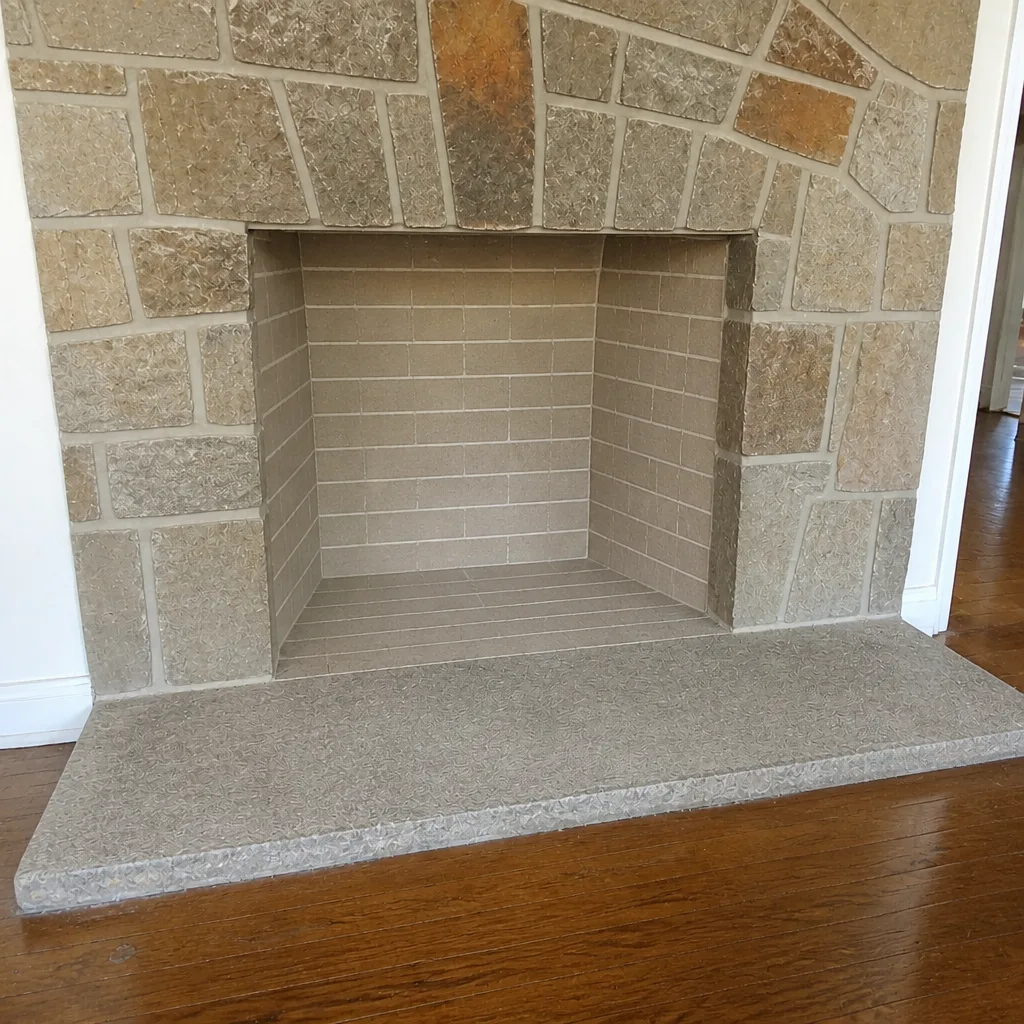
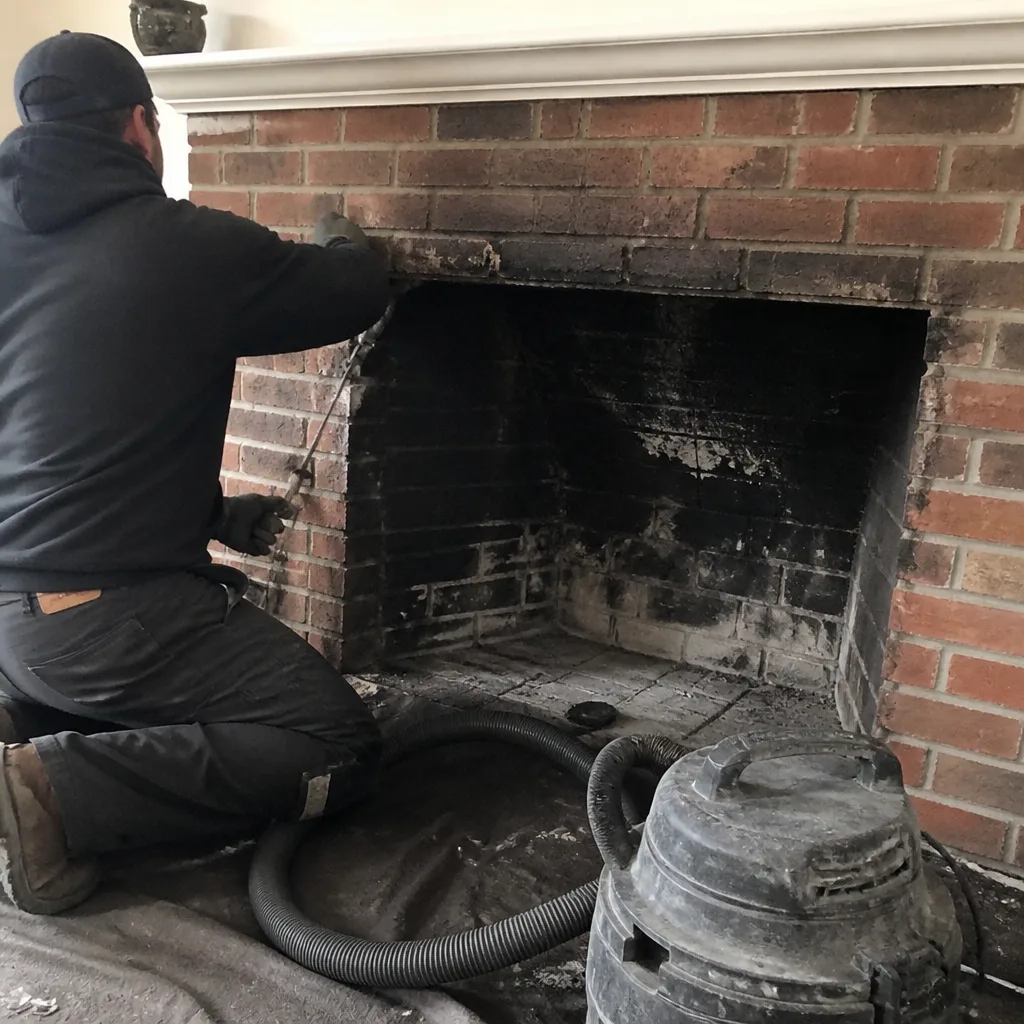
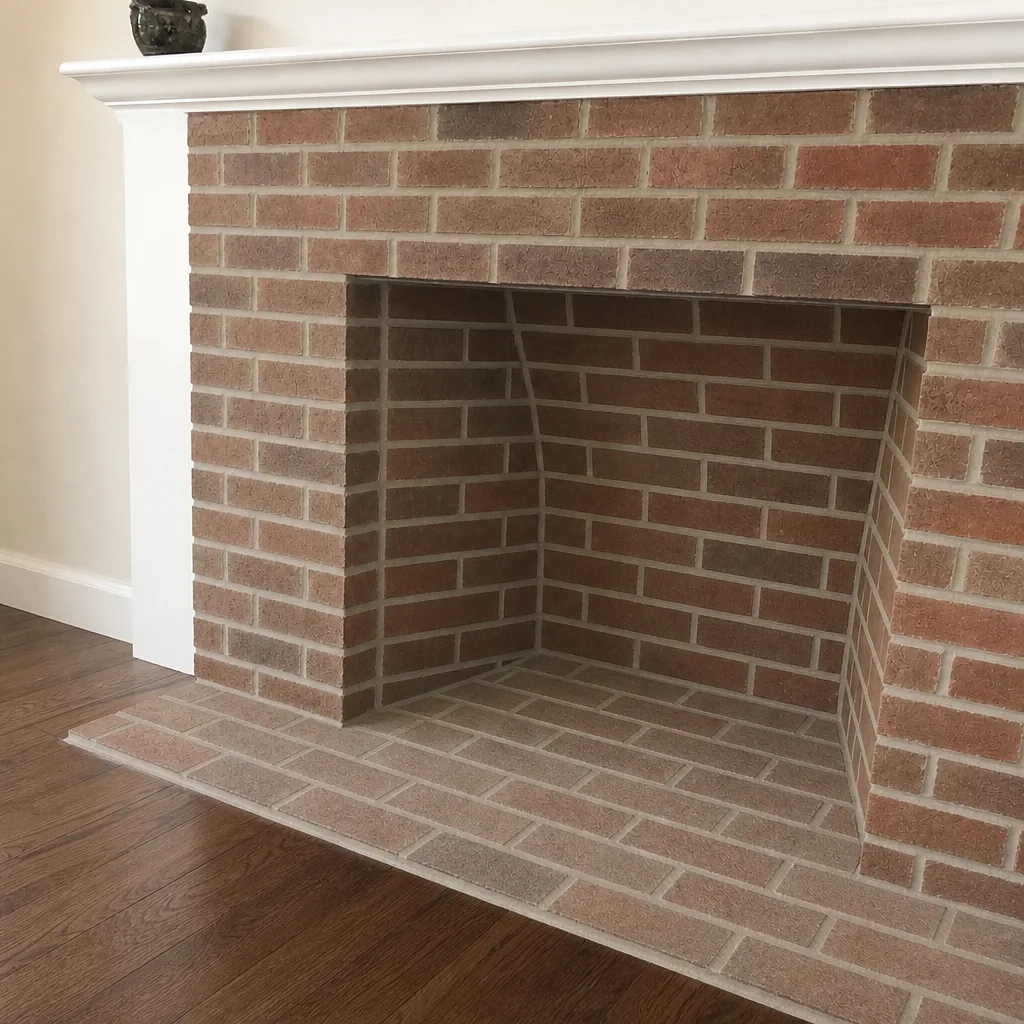
See the difference
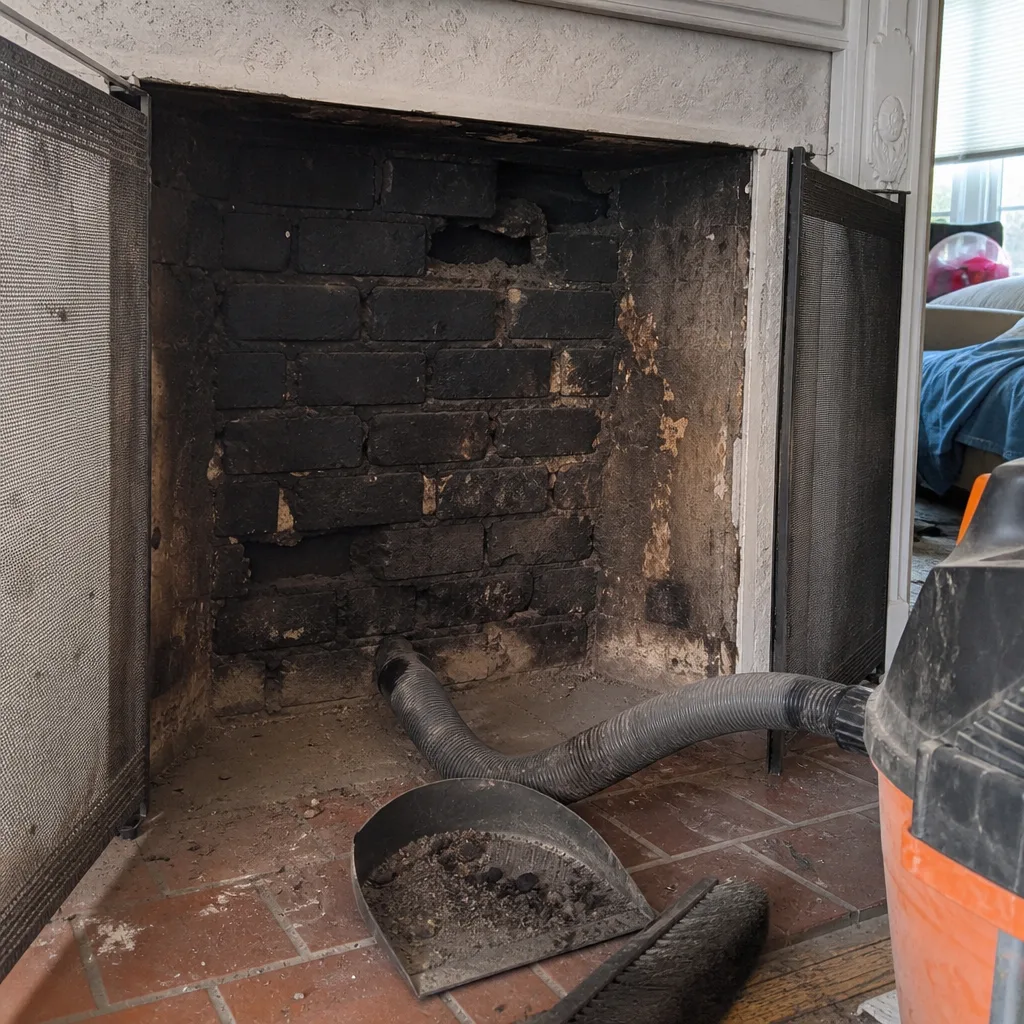 Before
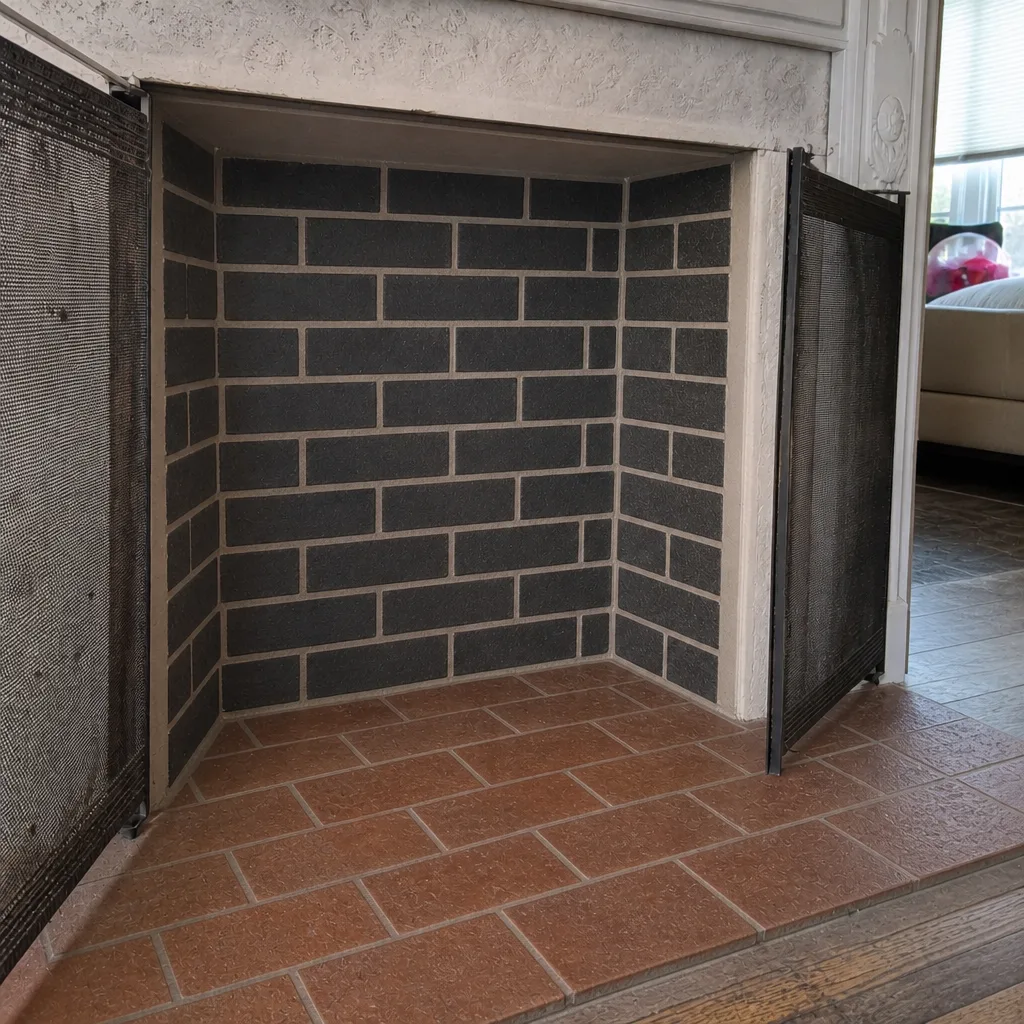 After
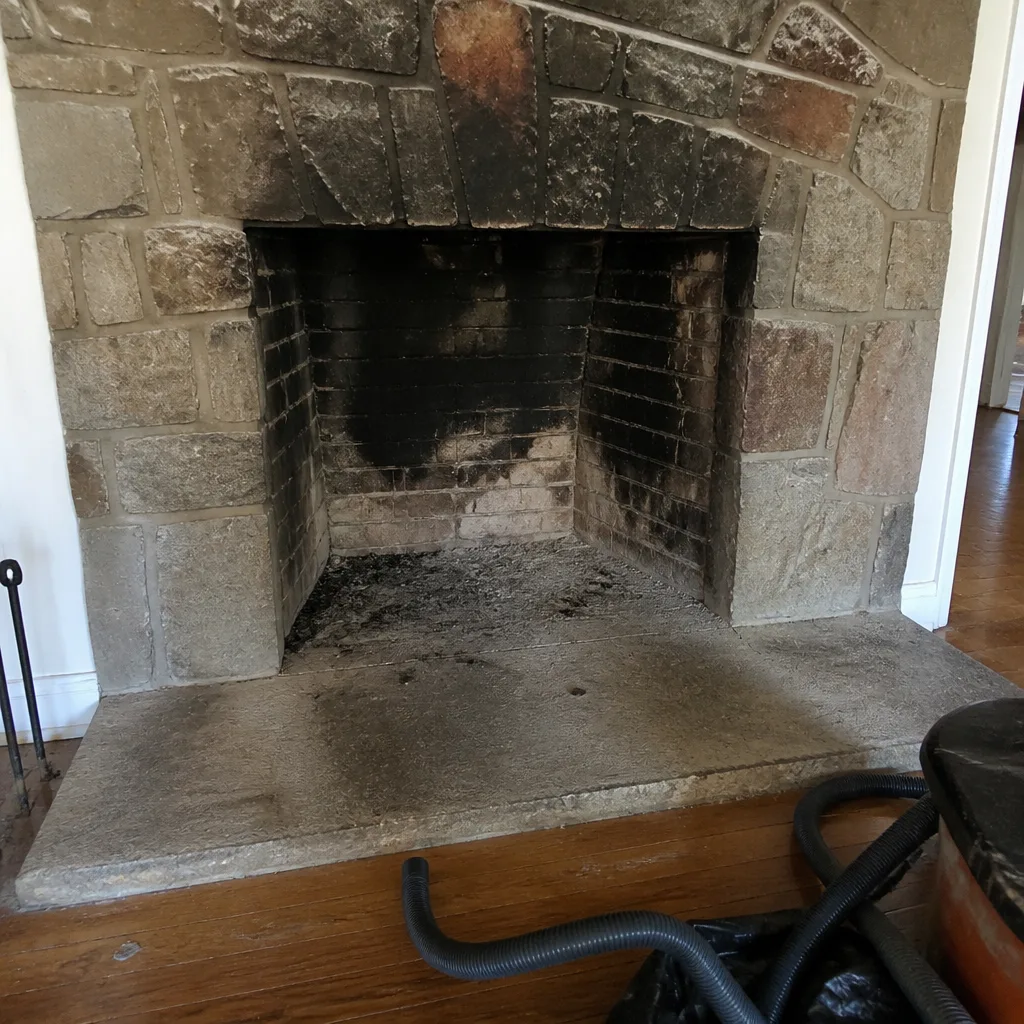 Before
 After
 Before
 After
When to Call a Professional
Call for a professional inspection when you can see any of the following: white chalky staining on the exterior brick, spalling or flaking on the stack, rust on firebox hardware, damaged firebox joints, debris in the firebox, or a persistent change in how the fireplace draws. Call right away, before lighting another fire, if you smell an acrid or sulfur odor when the fireplace is cold, if smoke backs into the room, or if you suspect a chimney fire has already happened. Also call if you’re buying or selling a Forest Hills home and the chimney hasn’t been assessed. Chimney Sweep Forest Hills offers free estimates in Forest Hills and across the neighborhoods we serve. Call (855) 410-4917. We answer 24/7. Fast dispatch from 7am to 7pm, Sunday through Friday.
Frequently Asked Questions
The earliest signs are usually visual rather than functional. A chalky white stain on exterior brick, a rust-colored mark on the damper or firebox hardware, or a musty smell in the firebox when it’s cold. Any of these means the chimney should be inspected before the next fire. Call (855) 410-4917 for an exact quote on a combined sweep and inspection. Estimates are free.
Yes, white staining (efflorescence) is always a sign of moisture movement through the masonry, even when the chimney otherwise looks fine. The stain forms when water dissolves salts inside the brick and mortar and then evaporates at the surface. Treat it as a signal to find and seal the water source, not as a cosmetic issue to clean up. Chimney Sweep Forest Hills can diagnose it with a free estimate call at (855) 410-4917. We answer 24/7. Fast dispatch from 7am to 7pm, Sunday through Friday.
A cold-fireplace smell usually points to one of three things: sulfur or match-strike (moisture reacting with creosote or mortar), musty (organic material or nesting in the flue), or acrid and eye-stinging (a strong creosote deposit). The acrid smell is the one to treat urgently, because it’s closest to a chimney fire risk. Have the chimney inspected before lighting another fire.
Smoke entering the room means the flue isn’t drawing the smoke up and out as it should, which points to a blockage, heavy creosote, a rough or damaged flue interior, or a pressure problem in the house. Don’t keep burning while it happens: it deposits soot and creosote in the living space and it may be a sign of a serious flue problem. Chimney Sweep Forest Hills can scope the chimney and show you exactly what’s causing it. Call (855) 410-4917. Estimates are free.
We recommend a sweep once per burning season, and an inspection at least once a year, even if you burn lightly. Chimneys that burn a lot of wood, or that show any warning sign from this guide, should be inspected sooner. If you’ve had a quiet chimney fire, don’t wait for the schedule; have it inspected before the next fire.
It depends on what the inspection finds. A minor crack in a firebox joint, caught early, may not be urgent. A compromised flue lining above the firebox is a different story: heat and moisture reach the home’s framing, and it should be addressed before the next burning season. What we recommend goes in your written report with photos, and we’ll tell you plainly which items can wait. Call (855) 410-4917 for a free estimate.
The Bottom Line
The chimney tells you before it fails. White efflorescence, spalling brick, smoke that hesitates, smells that shift from musty to acrid, and rust on the firebox hardware are all readable signals. Match them against the checklist in this guide. One sign, monitored; two or more, call a professional. The point of a sweep and an inspection is not to sell you work. It’s to see the chimney’s condition clearly and tell you honestly what needs attention and what doesn’t. Chimney Sweep Forest Hills works with DuraFlex, HeatShield, Gelco, Olympia Chimney, Famco, and Copperfield to diagnose the whole system, on the roof and in the firebox. Call (855) 410-4917 for a free estimate. We answer 24/7. Fast dispatch from 7am to 7pm, Sunday through Friday.
Written by the team at Chimney Sweep Forest Hills.